Es befinden sich keine Produkte im Warenkorb.

Share

Duduk Instrument: History, Craftsmanship and the Soul of Armenian Music

The duduk instrument is widely recognized as one of the most emotional and expressive wind instruments in the world. Known for its warm tone and deeply human sound, the Armenian duduk has carried centuries of musical tradition through generations of musicians, craftsmen, and composers.

Although many people discover the duduk through film music or modern world music collaborations, the instrument’s roots extend far deeper into Armenian cultural history. Its sound is connected to memory, storytelling, celebration, and emotion in a way few instruments can achieve.

Today, the duduk instrument continues to captivate listeners around the world while preserving a musical tradition that has existed for centuries.
👉 Discover the Armenian Duduk: https://duduk-rocks.com/
👉 Explore more articles: https://duduk-rocks.com/blog/

What Is a Duduk Instrument?

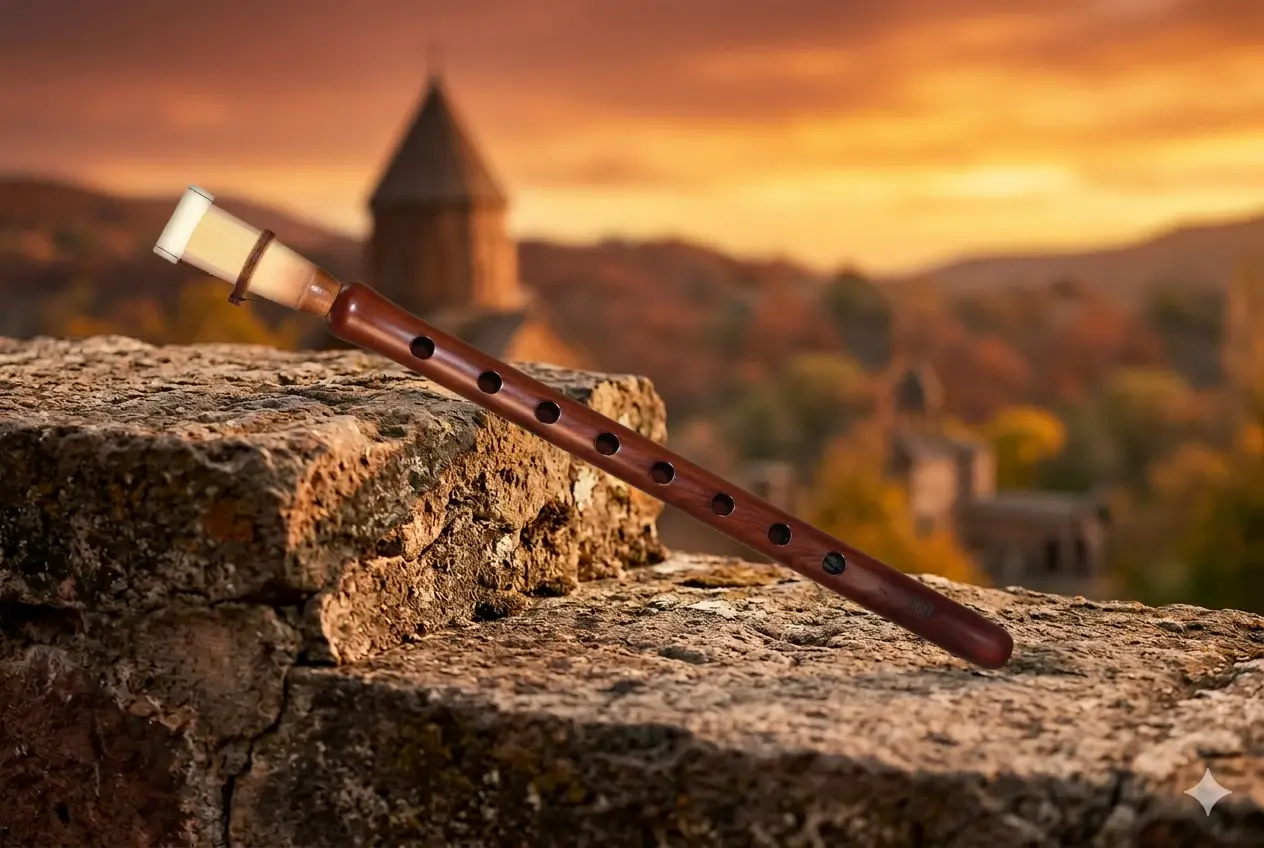
The duduk is a traditional Armenian double-reed woodwind instrument typically made from apricot wood.

Its design appears relatively simple:

  • a cylindrical wooden body, 
  • finger holes, 
  • and a large double reed called a ghamish

However, the combination of these elements produces a sound unlike almost any other instrument.

The duduk is especially known for:

  • its soft tone, 
  • warm resonance, 
  • breath-like phrasing, 
  • and emotional depth. 

Unlike brighter or sharper double-reed instruments, the Armenian duduk developed a darker and smoother tonal character that closely resembles the human voice.

This unique sound became one of the defining features of Armenian musical identity.

The Historical Origins of the Duduk Instrument

The origins of the duduk instrument are deeply connected to Armenian history and culture.

Although similar reed instruments exist throughout the Middle East and Caucasus region, the Armenian duduk evolved into its own distinct instrument with unique construction methods, tuning systems, and performance traditions.

For centuries, the duduk was played during:

  • weddings, 
  • community gatherings, 
  • storytelling performances, 
  • spiritual ceremonies, 
  • and moments of mourning. 

Its emotional flexibility allowed musicians to express both joy and sorrow with remarkable authenticity.

Over time, the duduk became more than a musical instrument — it became a symbol of Armenian cultural memory.

This cultural importance contributed to the international recognition of the Armenian duduk tradition by UNESCO as part of the Intangible Cultural Heritage of Humanity.

Why Apricot Wood Is Used for the Duduk

One of the most important characteristics of the duduk instrument is the use of apricot wood.

Armenian craftsmen traditionally prefer apricot wood because of its:

  • density, 
  • stability, 
  • natural resonance, 
  • and warm acoustic properties. 

The wood helps soften harsh frequencies and produces the smooth, velvety tone associated with the duduk.

The relationship between the wood and the reed is essential. Together, they create the instrument’s rich harmonic texture and emotional warmth.

Experienced duduk makers carefully dry and prepare the wood before shaping the instrument. This process may take years to ensure proper stability and sound quality.

The Importance of the Duduk Reed

The reed, or ghamish, plays a central role in shaping the instrument’s sound.

Unlike small reeds used on some other wind instruments, the duduk uses a large double reed that allows greater tonal flexibility and smoother phrasing.

The reed affects:

  • airflow, 
  • intonation, 
  • vibrato, 
  • tone color, 
  • and emotional expression. 

Because duduk reeds are handmade from natural cane, each reed develops its own unique response and character.

Professional musicians often spend years learning how to fully control the interaction between breath pressure, lip movement, and reed vibration.

This intimate relationship between player and reed is one reason the duduk sounds so expressive and human.

How the Duduk Instrument Produces Its Emotional Sound

Many listeners describe the duduk as sounding almost like a singing human voice.

This emotional quality comes from several combined factors:

  • the wide double reed, 
  • the cylindrical bore, 
  • the acoustic softness of apricot wood, 
  • and the performance techniques developed in Armenian musical tradition. 

Unlike highly aggressive or brilliant instruments, the duduk favors subtle tonal transitions and expressive phrasing.

Players use:

  • controlled breathing, 
  • delicate ornamentation, 
  • soft attacks, 
  • and smooth vibrato 

to create emotionally rich melodies.

This expressive style became central to Armenian duduk performance over many generations.

The Evolution of the Modern Duduk Instrument

Historically, the duduk existed in limited forms with fewer tuning possibilities.

During the twentieth century, Armenian masters contributed significantly to the modernization of the instrument. One of the most influential figures was Karlen Matevosyan, whose innovations improved tuning systems, finger hole placement, and overall acoustic balance.

These developments allowed the duduk to perform more accurately in:

  • orchestras, 
  • ensembles, 
  • film scores, 
  • and international collaborations. 

As a result, the instrument gained worldwide attention and became increasingly present in modern music.

Despite these improvements, traditional craftsmanship and playing techniques remain at the heart of authentic duduk performance.

Duduk Instrument in Film and Contemporary Music

The emotional power of the duduk instrument made it especially popular in cinematic music.

Its sound has appeared in numerous internationally recognized film scores, including:

  • Gladiator
  • The Last Temptation of Christ
  • and other historical or dramatic productions. 

Composers often use the duduk to create feelings of:

  • nostalgia, 
  • solitude, 
  • spirituality, 
  • mourning, 
  • or deep emotional reflection. 

Beyond film music, the duduk is now heard in:

  • ambient music, 
  • jazz fusion, 
  • world music, 
  • contemporary classical music, 
  • and experimental collaborations. 

Its adaptability helped introduce Armenian musical tradition to global audiences.

Famous Duduk Masters and Their Influence

Several legendary musicians helped preserve and expand the global recognition of the duduk instrument.

Among the most respected figures are:

  • Jivan Gasparyan, 
  • Vatche Hovsepyan, 
  • Georgy Minasov, 
  • Levon Madoyan, 
  • and Karlen Matevosyan. 

Their performances and teaching methods influenced generations of musicians while helping maintain the authenticity of Armenian duduk traditions.

Many modern duduk players continue to study their recordings and techniques today.

Why the Duduk Instrument Remains Unique

Although instruments similar to the duduk exist in neighboring regions, the Armenian duduk maintains a unique identity because of:

  • its specific reed construction, 
  • apricot wood body, 
  • tonal softness, 
  • and centuries-old performance tradition. 

The instrument is not designed for technical showmanship alone. Instead, it prioritizes emotional communication and expressive depth.

This artistic philosophy is part of what makes the duduk so distinctive compared to many other wind instruments.

Its sound feels personal, intimate, and timeless.

Conclusion

The duduk instrument represents far more than a traditional woodwind instrument.

It carries centuries of Armenian history, craftsmanship, and emotional expression through a sound that continues to resonate with listeners around the world.

From the careful preparation of apricot wood to the handmade reed and expressive playing techniques, every part of the instrument contributes to its unmistakable voice.

Whether performed in traditional Armenian music or modern cinematic compositions, the duduk remains one of the most powerful and emotionally moving instruments ever created.

FAQ

What is a duduk instrument?

A duduk instrument is a traditional Armenian double-reed woodwind instrument known for its warm, soft, and emotional sound.

What is the duduk made from?

Traditional duduks are usually made from apricot wood, which helps create the instrument’s warm and smooth tonal character.

Why does the duduk sound so emotional?

The emotional sound comes from the combination of the large double reed, the apricot wood body, and expressive Armenian playing techniques that imitate the human voice.

Is the duduk difficult to learn?

The duduk can be challenging for beginners because it requires breath control and reed management. However, with practice and proper guidance, many players successfully learn the instrument.

What is the duduk reed called?

The duduk reed is traditionally called a ghamish in Armenian musical culture.

Where does the duduk instrument come from?

The duduk originates from Armenia and has been part of Armenian musical tradition for centuries.

Is the duduk used in movie soundtracks?

Yes. The duduk is widely used in film music because of its emotional and cinematic sound. It has appeared in many famous movie scores.

What makes the Armenian duduk unique?

The Armenian duduk is unique because of its apricot wood construction, large double reed, warm tone, and expressive performance tradition.

Who are the most famous duduk players?

Some of the most respected duduk masters include Jivan Gasparyan, Vatche Hovsepyan, Georgy Minasov, Levon Madoyan, and Karlen Matevosyan.

Can the duduk be used in modern music?

Yes. Today, the duduk is used in world music, jazz, ambient music, orchestral compositions, and modern cinematic productions.

We use cookies to optimize our website and provide you with the best possible user experience. By continuing to use our site, you consent to the use of cookies. Learn more. View more
Cookies settings
Accept
Privacy & Cookie policy
Privacy & Cookies policy
Cookie name Active
Privacy Policy 1. Controller The controller responsible for data processing on this website within the meaning of the General Data Protection Regulation (GDPR) is: Duduk-Rocks GbR Artur Demurchyan Andersen Str. 10a 59557 Lippstadt Germany Phone: +49 159-04099627 Email: info@duduk-rocks.com 2. Collection and Storage of Personal Data and the Nature and Purpose of their Use a) When visiting the website When you visit our website www.duduk-rocks.com, www.dudukrocks.com or www.duduk.rocks, the browser used on your device automatically sends information to the server of our website. This information is temporarily stored in a so-called log file. The following information is collected without your intervention and stored until automated deletion:
    • IP address of the requesting computer
    • Date and time of access
    • Name and URL of the retrieved file
    • Website from which access is made (referrer URL)
    • Used browser and, if applicable, the operating system of your computer as well as the name of your access provider
The mentioned data is processed by us for the following purposes:
    • Ensuring a smooth connection setup of the website
    • Ensuring comfortable use of our website
    • Evaluation of system security and stability as well as for further administrative purposes
The legal basis for data processing is Art. 6 para. 1 sentence 1 lit. f GDPR. Our legitimate interest follows from the purposes listed above for data collection. In no case do we use the collected data for the purpose of drawing conclusions about your person. b) When using our contact form If you have any questions, we offer you the opportunity to contact us via a form provided on the website. It is necessary to provide a valid email address so that we know who the request is from and to be able to respond to it. Further information can be provided voluntarily. Data processing for the purpose of contacting us is based on your voluntarily given consent pursuant to Art. 6 para. 1 sentence 1 lit. a GDPR. The personal data collected by us for the use of the contact form will be automatically deleted after the request you have made is completed. 3. Data Disclosure Your personal data will not be transferred to third parties for purposes other than those listed below. We will only share your personal data with third parties if:
    • You have given your express consent pursuant to Art. 6 para. 1 sentence 1 lit. a GDPR,
    • the disclosure is necessary for the establishment, exercise or defense of legal claims pursuant to Art. 6 para. 1 sentence 1 lit. f GDPR and there is no reason to assume that you have an overriding legitimate interest in not disclosing your data,
    • in the event that there is a legal obligation for the disclosure pursuant to Art. 6 para. 1 sentence 1 lit. c GDPR, and
    • it is legally permissible and required for the performance of a contract with you pursuant to Art. 6 para. 1 sentence 1 lit. b GDPR.
4. Rights of Data Subjects You have the right:
    • pursuant to Art. 15 GDPR to request information about your personal data processed by us. In particular, you can request information about the processing purposes, the category of personal data, the categories of recipients to whom your data has been or will be disclosed, the planned storage period, the existence of a right to rectification, erasure, restriction of processing or objection, the existence of a right to lodge a complaint, the source of your data, if it was not collected by us, as well as the existence of automated decision-making including profiling and, if applicable, meaningful information about its details;
    • pursuant to Art. 16 GDPR to request the rectification of incorrect or the completion of your personal data stored by us without undue delay;
    • pursuant to Art. 17 GDPR to request the erasure of your personal data stored by us, unless the processing is necessary for the exercise of the right to freedom of expression and information, for the fulfillment of a legal obligation, for reasons of public interest or for the establishment, exercise or defense of legal claims;
    • pursuant to Art. 18 GDPR to request the restriction of the processing of your personal data, insofar as the accuracy of the data is disputed by you, the processing is unlawful, but you oppose its erasure and we no longer need the data, but you need it for the establishment, exercise or defense of legal claims or you have objected to the processing pursuant to Art. 21 GDPR;
    • pursuant to Art. 20 GDPR to receive your personal data, which you have provided to us, in a structured, commonly used and machine-readable format or to request the transfer to another controller;
    • pursuant to Art. 7 para. 3 GDPR to withdraw your consent at any time. As a result, we may no longer continue the data processing based on this consent for the future and
    • pursuant to Art. 77 GDPR to lodge a complaint with a supervisory authority. As a rule, you can contact the supervisory authority of your usual place of residence or workplace or our company headquarters.
5. Right to Object If your personal data is processed based on legitimate interests pursuant to Art. 6 para. 1 sentence 1 lit. f GDPR, you have the right to object to the processing of your personal data pursuant to Art. 21 GDPR, insofar as there are reasons for this arising from your particular situation or the objection is directed against direct marketing. In the latter case, you have a general right to object, which we will implement without specifying a particular situation. If you wish to exercise your right to withdraw or object, just send an email to info@duduk-rocks.com. 6. Data Security We use the widespread SSL (Secure Socket Layer) procedure in connection with the highest encryption level supported by your browser when you visit the website. Typically, this is 256-bit encryption. If your browser does not support 256-bit encryption, we use 128-bit v3 technology instead. You can tell whether a single page of our website is transmitted in encrypted form by the closed display of the key or lock symbol in the lower status bar of your browser. We also use appropriate technical and organizational security measures to protect your data against accidental or intentional manipulation, partial or complete loss, destruction or unauthorized access by third parties. Our security measures are continuously improved in line with technological developments. 7. Validity and Changes to this Privacy Policy This privacy policy is currently valid and was last updated in July 2024. Due to the further development of our website and offers above or due to changed legal or official requirements, it may be necessary to change this privacy policy. The current privacy policy can be viewed and printed by you at any time on the website at www.duduk-rocks.com. 8. Cookies We use cookies on our website. Cookies are small files that your browser automatically creates and that are stored on your device (laptop, tablet, smartphone, etc.) when you visit our site. Cookies do not harm your device and do not contain viruses, trojans, or other malicious software. Information is stored in the cookie, which results in each case in connection with the specific device used. However, this does not mean that we are immediately aware of your identity. The use of cookies serves to make the use of our offer more pleasant for you. For example, we use session cookies to recognize that you have already visited individual pages of our website. These are automatically deleted after leaving our site. In addition, we also use temporary cookies to optimize user-friendliness, which are stored on your device for a certain fixed period. If you visit our site again to use our services, it is automatically recognized that you have already been with us and what entries and settings you have made, so you do not have to enter them again. We also use cookies to statistically record the use of our website and to evaluate it for you for the purpose of optimizing our offer (see Section 5). These cookies enable us to recognize automatically when you visit our site again that you have already been with us. These cookies are automatically deleted after a defined period. The data processed by cookies are necessary for the purposes mentioned to protect our legitimate interests as well as those of third parties according to Art. 6 para. 1 sentence 1 lit. f GDPR. Most browsers accept cookies automatically. However, you can configure your browser so that no cookies are stored on your computer or a message always appears before a new cookie is created. However, completely disabling cookies may mean that you cannot use all the functions of our website. For more information on the cookies we use and to manage your cookie preferences, please visit our [Cookie Policy] (Link to Cookie Policy).
Save settings
Cookies settings