Es befinden sich keine Produkte im Warenkorb.

Share

Duduk Meaning: The History, Symbolism, and Cultural Significance of Armenia’s Iconic Instrument

If you have recently discovered the duduk, one of the first questions you may have is simple: what does “duduk” actually mean?

For some, the word refers only to a musical instrument. For others, it represents an entire cultural tradition. The truth lies somewhere in between. The duduk is both a physical instrument and a powerful symbol of Armenian heritage, history, and identity.

Known for its warm, soulful sound, the duduk has captivated listeners far beyond its homeland. Today, it can be heard in concert halls, film soundtracks, world music collaborations, and cultural celebrations across the globe. Yet despite its growing popularity, many people are unfamiliar with the meaning behind the instrument and the role it has played for generations.

In this guide, we explore the meaning of the word “duduk,” its origins, its cultural significance, and why it remains one of the world’s most distinctive and beloved traditional instruments.
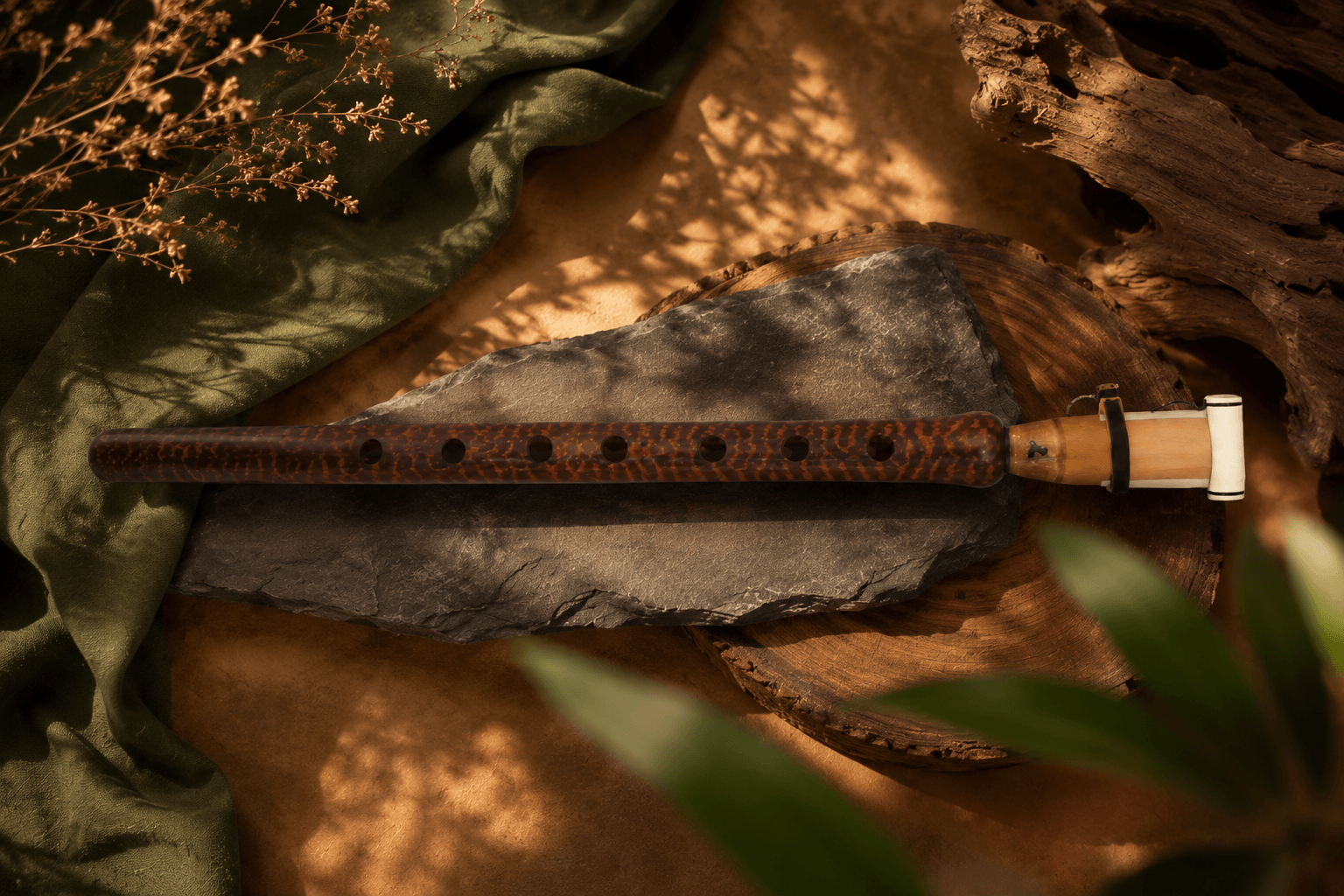
Duduk Meaning

👉 Discover the Armenian Duduk: https://duduk-rocks.com/
👉 Explore more articles: https://duduk-rocks.com/blog/

What Does Duduk Mean?

The word duduk primarily refers to a traditional double-reed woodwind instrument that has become closely associated with Armenia.

Unlike many modern musical terms that have a precise documented linguistic origin, the exact etymology of the word “duduk” remains debated among historians and linguists. Various forms of similar words have appeared throughout different regions of the Middle East and Caucasus over centuries.

Today, however, when musicians, scholars, and listeners refer to a “duduk,” they are generally speaking about the Armenian instrument recognized for its expressive and deeply emotional sound.

The meaning of the word has evolved beyond the instrument itself. For many people, “duduk” also represents:

  • Armenian cultural identity 
  • Musical heritage 
  • Emotional storytelling through music 
  • Traditional craftsmanship 
  • A connection between past and present generations 

In other words, the duduk is not simply something that is played—it is something that carries cultural memory.

What Is a Duduk?

A duduk is a double-reed woodwind instrument traditionally crafted from apricot wood.

Its design is relatively simple:

  • A cylindrical wooden body 
  • Finger holes for producing notes 
  • A large double reed attached at the top 

Despite its simplicity, the instrument is capable of producing remarkable expressive depth.

The unique combination of:

  • Apricot wood 
  • A wide reed 
  • Breath-based performance techniques 

creates the warm, vocal-like sound that has become the instrument’s signature.

If you would like to understand how the instrument is built, you can also read our guide:

From Tree to Instrument: The Full Journey of a Duduk from Apricot Wood to Music

on Duduk-Rocks.

The Historical Origins of the Duduk

The duduk has a long history that stretches back centuries.

While historians continue to debate the precise timeline of its development, the instrument has been associated with Armenian musical traditions for generations.

Its enduring presence in Armenian culture reflects its importance as more than simply a musical tool. Throughout history, the duduk has accompanied:

  • Weddings 
  • Community celebrations 
  • Folk performances 
  • Religious gatherings 
  • Memorial ceremonies 

Because music played such an important role in preserving cultural traditions, the duduk became deeply connected to everyday life.

Unlike many instruments that evolved primarily within professional musical settings, the duduk developed as part of community life and cultural expression.

The Cultural Meaning of the Duduk

To understand the true meaning of the duduk, it is necessary to look beyond its physical structure.

For many Armenians, the instrument symbolizes:

Continuity

The duduk has been passed from one generation to the next through performance, teaching, and craftsmanship.

Identity

The instrument has become one of the most recognizable symbols of Armenian musical culture.

Memory

Many traditional melodies performed on the duduk are connected to family traditions, local histories, and cultural experiences.

Emotional Expression

The duduk is often used to communicate emotions that can be difficult to express through words alone.

Its sound can convey:

  • Joy 
  • Reflection 
  • Nostalgia 
  • Celebration 
  • Remembrance 

This emotional range explains why listeners from many different backgrounds connect with the instrument even if they have no prior knowledge of Armenian culture.

Why the Duduk Is Often Called the Voice of Armenia

One phrase frequently associated with the instrument is:

“The Voice of Armenia.”

This description comes from several factors.

First, the sound of the duduk closely resembles qualities found in the human voice:

  • Smooth phrasing 
  • Breath-driven expression 
  • Subtle pitch variations 
  • Warm tonal characteristics 

Second, the instrument has historically accompanied many important moments of Armenian life.

As a result, the duduk became a musical representation of collective cultural experience.

If you would like to learn more about the acoustic reasons behind its emotional sound, read:

Why the Duduk Sounds So Emotional: The Science Behind Its Unique Tone

on Duduk-Rocks Blog.

The Duduk in Traditional Music

Traditional Armenian music remains the instrument’s most authentic musical home.

In traditional settings, the duduk is often used to perform:

  • Folk songs 
  • Dance melodies 
  • Lyrical instrumental pieces 
  • Ceremonial music 

These performances emphasize expression over technical complexity.

Rather than focusing on speed or virtuosity, traditional duduk music prioritizes:

  • Tone quality 
  • Emotional depth 
  • Musical storytelling 

This approach continues to influence modern players around the world.

The Duduk in Modern Music and Film

Although rooted in tradition, the duduk has successfully crossed cultural and musical boundaries.

Today it appears in:

  • Film soundtracks 
  • World music projects 
  • Contemporary compositions 
  • Ambient music 
  • Cross-cultural collaborations 

Composers are often drawn to the instrument because of its ability to immediately create emotional atmosphere.

Its distinctive sound can evoke:

  • Ancient landscapes 
  • Reflection 
  • Memory 
  • Spirituality 
  • Human connection 

This international exposure has introduced millions of listeners to the instrument and its cultural heritage.

Common Misconceptions About the Duduk

The Duduk Is Not a Flute

Although sometimes mistaken for one, the duduk is a double-reed instrument and functions differently from flutes.

The Duduk Is Not Only for Sad Music

Its emotional sound often leads people to associate it exclusively with melancholy.

In reality, the instrument is also used in:

  • Celebrations 
  • Weddings 
  • Folk dances 
  • Festive music 

All Duduks Do Not Sound the Same

Different keys, reeds, and playing styles can significantly influence the instrument’s sound.

Why Learning the Meaning of the Duduk Matters

Understanding the meaning of the duduk enriches the listening experience.

When people hear the instrument for the first time, they often notice its emotional character.

When they learn about:

  • Its history 
  • Its craftsmanship 
  • Its cultural role 

they begin to understand why the instrument carries such significance for musicians and listeners alike.

The duduk represents a rare combination of:

  • Musical beauty 
  • Cultural heritage 
  • Human expression 

That combination explains why it continues to resonate with audiences worldwide.

Conclusion

The meaning of the duduk extends far beyond its definition as a musical instrument.

It is a symbol of tradition, craftsmanship, cultural identity, and emotional expression. Its voice has accompanied generations of musicians and listeners, preserving stories, memories, and artistic traditions through sound.

Whether you are discovering the instrument for the first time or beginning your own musical journey, understanding the meaning of the duduk provides valuable insight into one of the world’s most distinctive musical traditions.

Explore more articles, guides, and resources on the Duduk-Rocks Blog and continue your journey into the fascinating world of the duduk.

Frequently Asked Questions

What does duduk mean in English?

“Duduk” is the name of a traditional double-reed woodwind instrument most closely associated with Armenian musical culture. The word itself is generally used directly in English without translation.

Is the duduk only Armenian?

The instrument is most strongly associated with Armenia and Armenian cultural traditions. Similar reed instruments exist in neighboring regions, but the Armenian duduk has developed its own distinctive identity and sound.

Why is the duduk made from apricot wood?

Apricot wood offers acoustic properties that contribute to the instrument’s warm and expressive tone. It has been used by traditional craftsmen for generations.

Why does the duduk sound so emotional?

Its large double reed, warm wood resonance, and vocal-like phrasing create a sound that many listeners perceive as deeply expressive and human.

Is the duduk difficult to learn?

Like any wind instrument, it requires practice. Breath control, reed management, and tone production are important skills that develop over time.

Can the duduk be used in modern music?

Yes. Today, the duduk is widely used in film music, world music, contemporary compositions, and fusion projects while remaining rooted in its traditional heritage.


We use cookies to optimize our website and provide you with the best possible user experience. By continuing to use our site, you consent to the use of cookies. Learn more. View more
Cookies settings
Accept
Privacy & Cookie policy
Privacy & Cookies policy
Cookie name Active
Privacy Policy 1. Controller The controller responsible for data processing on this website within the meaning of the General Data Protection Regulation (GDPR) is: Duduk-Rocks GbR Artur Demurchyan Andersen Str. 10a 59557 Lippstadt Germany Phone: +49 159-04099627 Email: info@duduk-rocks.com 2. Collection and Storage of Personal Data and the Nature and Purpose of their Use a) When visiting the website When you visit our website www.duduk-rocks.com, www.dudukrocks.com or www.duduk.rocks, the browser used on your device automatically sends information to the server of our website. This information is temporarily stored in a so-called log file. The following information is collected without your intervention and stored until automated deletion:
    • IP address of the requesting computer
    • Date and time of access
    • Name and URL of the retrieved file
    • Website from which access is made (referrer URL)
    • Used browser and, if applicable, the operating system of your computer as well as the name of your access provider
The mentioned data is processed by us for the following purposes:
    • Ensuring a smooth connection setup of the website
    • Ensuring comfortable use of our website
    • Evaluation of system security and stability as well as for further administrative purposes
The legal basis for data processing is Art. 6 para. 1 sentence 1 lit. f GDPR. Our legitimate interest follows from the purposes listed above for data collection. In no case do we use the collected data for the purpose of drawing conclusions about your person. b) When using our contact form If you have any questions, we offer you the opportunity to contact us via a form provided on the website. It is necessary to provide a valid email address so that we know who the request is from and to be able to respond to it. Further information can be provided voluntarily. Data processing for the purpose of contacting us is based on your voluntarily given consent pursuant to Art. 6 para. 1 sentence 1 lit. a GDPR. The personal data collected by us for the use of the contact form will be automatically deleted after the request you have made is completed. 3. Data Disclosure Your personal data will not be transferred to third parties for purposes other than those listed below. We will only share your personal data with third parties if:
    • You have given your express consent pursuant to Art. 6 para. 1 sentence 1 lit. a GDPR,
    • the disclosure is necessary for the establishment, exercise or defense of legal claims pursuant to Art. 6 para. 1 sentence 1 lit. f GDPR and there is no reason to assume that you have an overriding legitimate interest in not disclosing your data,
    • in the event that there is a legal obligation for the disclosure pursuant to Art. 6 para. 1 sentence 1 lit. c GDPR, and
    • it is legally permissible and required for the performance of a contract with you pursuant to Art. 6 para. 1 sentence 1 lit. b GDPR.
4. Rights of Data Subjects You have the right:
    • pursuant to Art. 15 GDPR to request information about your personal data processed by us. In particular, you can request information about the processing purposes, the category of personal data, the categories of recipients to whom your data has been or will be disclosed, the planned storage period, the existence of a right to rectification, erasure, restriction of processing or objection, the existence of a right to lodge a complaint, the source of your data, if it was not collected by us, as well as the existence of automated decision-making including profiling and, if applicable, meaningful information about its details;
    • pursuant to Art. 16 GDPR to request the rectification of incorrect or the completion of your personal data stored by us without undue delay;
    • pursuant to Art. 17 GDPR to request the erasure of your personal data stored by us, unless the processing is necessary for the exercise of the right to freedom of expression and information, for the fulfillment of a legal obligation, for reasons of public interest or for the establishment, exercise or defense of legal claims;
    • pursuant to Art. 18 GDPR to request the restriction of the processing of your personal data, insofar as the accuracy of the data is disputed by you, the processing is unlawful, but you oppose its erasure and we no longer need the data, but you need it for the establishment, exercise or defense of legal claims or you have objected to the processing pursuant to Art. 21 GDPR;
    • pursuant to Art. 20 GDPR to receive your personal data, which you have provided to us, in a structured, commonly used and machine-readable format or to request the transfer to another controller;
    • pursuant to Art. 7 para. 3 GDPR to withdraw your consent at any time. As a result, we may no longer continue the data processing based on this consent for the future and
    • pursuant to Art. 77 GDPR to lodge a complaint with a supervisory authority. As a rule, you can contact the supervisory authority of your usual place of residence or workplace or our company headquarters.
5. Right to Object If your personal data is processed based on legitimate interests pursuant to Art. 6 para. 1 sentence 1 lit. f GDPR, you have the right to object to the processing of your personal data pursuant to Art. 21 GDPR, insofar as there are reasons for this arising from your particular situation or the objection is directed against direct marketing. In the latter case, you have a general right to object, which we will implement without specifying a particular situation. If you wish to exercise your right to withdraw or object, just send an email to info@duduk-rocks.com. 6. Data Security We use the widespread SSL (Secure Socket Layer) procedure in connection with the highest encryption level supported by your browser when you visit the website. Typically, this is 256-bit encryption. If your browser does not support 256-bit encryption, we use 128-bit v3 technology instead. You can tell whether a single page of our website is transmitted in encrypted form by the closed display of the key or lock symbol in the lower status bar of your browser. We also use appropriate technical and organizational security measures to protect your data against accidental or intentional manipulation, partial or complete loss, destruction or unauthorized access by third parties. Our security measures are continuously improved in line with technological developments. 7. Validity and Changes to this Privacy Policy This privacy policy is currently valid and was last updated in July 2024. Due to the further development of our website and offers above or due to changed legal or official requirements, it may be necessary to change this privacy policy. The current privacy policy can be viewed and printed by you at any time on the website at www.duduk-rocks.com. 8. Cookies We use cookies on our website. Cookies are small files that your browser automatically creates and that are stored on your device (laptop, tablet, smartphone, etc.) when you visit our site. Cookies do not harm your device and do not contain viruses, trojans, or other malicious software. Information is stored in the cookie, which results in each case in connection with the specific device used. However, this does not mean that we are immediately aware of your identity. The use of cookies serves to make the use of our offer more pleasant for you. For example, we use session cookies to recognize that you have already visited individual pages of our website. These are automatically deleted after leaving our site. In addition, we also use temporary cookies to optimize user-friendliness, which are stored on your device for a certain fixed period. If you visit our site again to use our services, it is automatically recognized that you have already been with us and what entries and settings you have made, so you do not have to enter them again. We also use cookies to statistically record the use of our website and to evaluate it for you for the purpose of optimizing our offer (see Section 5). These cookies enable us to recognize automatically when you visit our site again that you have already been with us. These cookies are automatically deleted after a defined period. The data processed by cookies are necessary for the purposes mentioned to protect our legitimate interests as well as those of third parties according to Art. 6 para. 1 sentence 1 lit. f GDPR. Most browsers accept cookies automatically. However, you can configure your browser so that no cookies are stored on your computer or a message always appears before a new cookie is created. However, completely disabling cookies may mean that you cannot use all the functions of our website. For more information on the cookies we use and to manage your cookie preferences, please visit our [Cookie Policy] (Link to Cookie Policy).
Save settings
Cookies settings