Einleitung
Among the world’s most expressive traditional instruments, the Armenian duduk holds a truly special place. Known for its warm, breathy, and deeply emotional tone, the duduk has captivated musicians, composers, and listeners across cultures for centuries.
Often described as one of the most human-sounding instruments ever created, the Armenian duduk carries the musical soul of Armenia. Its sound can be hauntingly melancholic, peaceful, or deeply cinematic, which explains why it is frequently used in film scores, world music, and modern ambient compositions.
In this article, we explore the history, construction, sound, and cultural importance of the Armenian duduk, and why this ancient instrument continues to inspire musicians around the world.
What Is the Armenian Duduk?
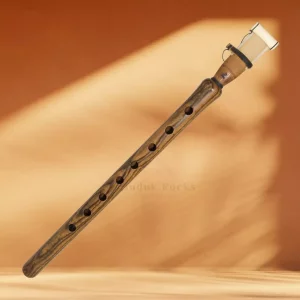
Die Armenian duduk is a traditional double-reed woodwind instrument that originated in Armenia more than 1,500 years ago. It is considered one of the most iconic instruments of Armenian musical culture and is often associated with emotional storytelling through music.
Unlike many other woodwind instruments, the duduk produces a soft and warm tone that feels almost vocal in character. Its sound is mellow, smooth, and expressive, making it particularly suitable for slow melodies and emotional compositions.
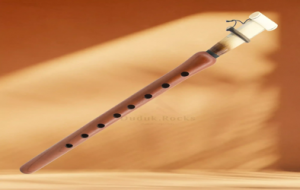
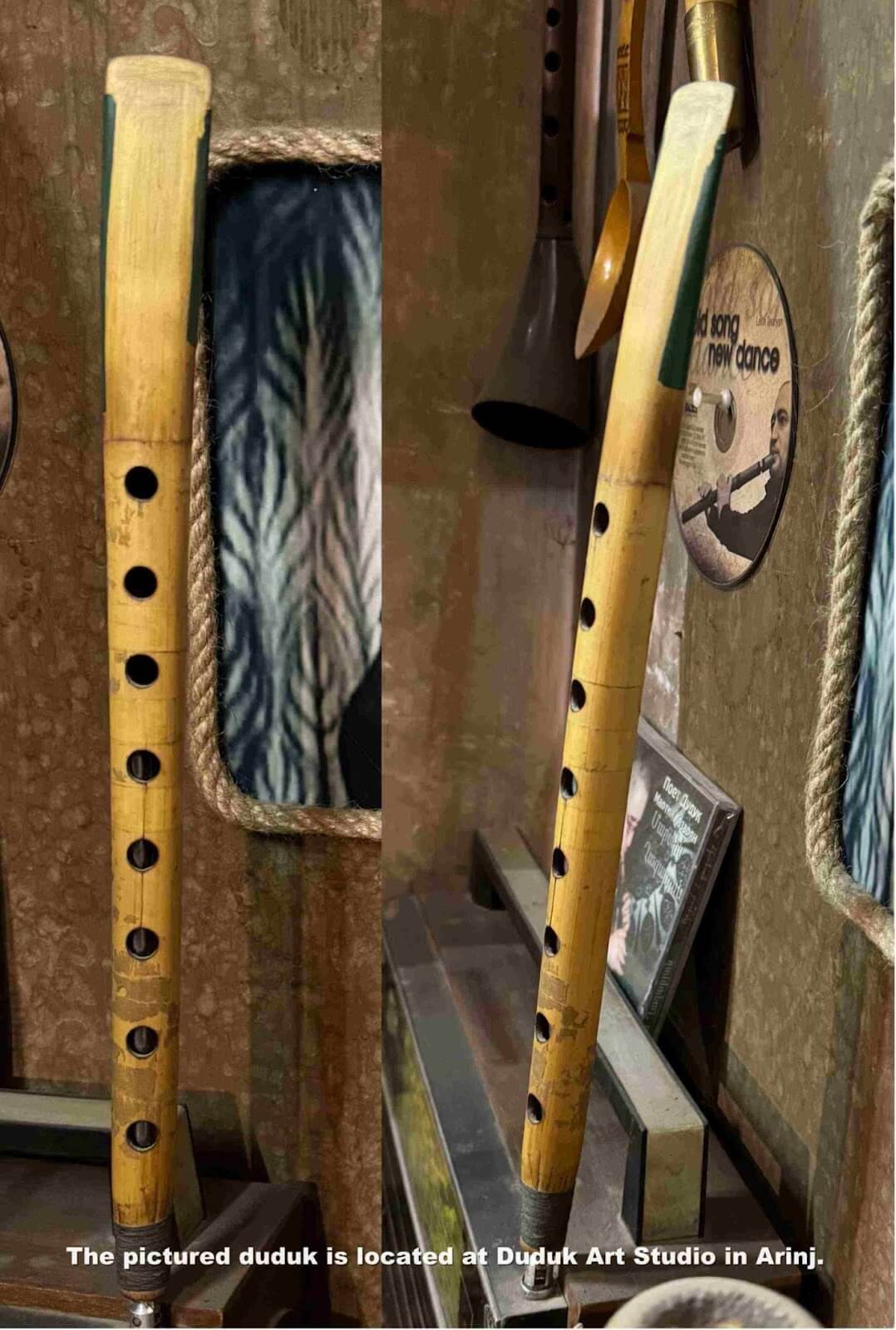
Depending on the key, the instrument is between 28 and 40 cm long. It has eight finger holes on the front and two additional holes on the back: a thumb hole and an additional hole on the underside. The latter is closed by applying counterpressure to the player’s belly.
One of the defining features of the Armenian duduk is its large double reed, called the ghamish. This reed is responsible for the instrument’s distinctive sound and gives the duduk its rich and warm tone.
The History of the Armenian Duduk
The Armenian duduk has a long and fascinating history that dates back over a millennium. Historical references suggest that early forms of the instrument were already being played in Armenia during the early medieval period, though its origins may be even older. Early instrument makers crafted the duduk entirely from reed plants. Over the course of its evolution, the body of the instrument was replaced with more durable hardwoods—most notably apricot wood—to enhance its resonance and longevity. Today, only the large double-reed mouthpiece, known as the ghamish, continues to be made from reed.
Throughout Armenian history, the duduk has played an essential role in traditional celebrations, ceremonies, and storytelling. It was commonly performed at weddings, festivals, and community gatherings, often accompanied by a second duduk playing a continuous drone known as the dam.
This musical pairing creates a unique sound texture that is both hypnotic and emotionally powerful.
The cultural importance of the Armenian duduk became internationally recognized in 2005, when UNESCO declared the Armenian duduk and its music a Masterpiece of the Intangible Cultural Heritage of Humanity. This recognition highlighted the instrument’s deep connection to Armenian identity and cultural tradition.
Today, the duduk remains a symbol of Armenia’s musical heritage and continues to be played by both traditional musicians and contemporary artists around the world.
Why the Armenian Duduk Sound Is So Unique
The sound of the Armenian duduk is instantly recognizable. Unlike brighter woodwind instruments such as the flute or clarinet, the duduk produces a darker and more intimate tone.
Several elements contribute to this distinctive sound.
Apricot Wood Construction
Authentic duduks are traditionally crafted from aged apricot wood. This dense wood plays a crucial role in shaping the instrument’s warm tonal qualities. The natural acoustic properties of apricot wood help produce a soft resonance that enhances the instrument’s emotional depth.
The Large Double Reed
Die ghamish, or double reed, is much larger than those found on instruments like the oboe or bassoon. This large reed allows the player to control airflow in a way that produces the duduk’s characteristic breathy sound.
Expressive Playing Techniques
Duduk players use subtle breath control, finger shading, and vibrato to create an incredibly expressive performance style. These techniques allow the instrument to imitate the emotional nuances of the human voice.
As a result, many listeners describe the Armenian duduk as one of the most emotionally powerful wind instruments in the world.
The Armenian Duduk in Film and Modern Music
Over the past few decades, the Armenian duduk has gained international recognition thanks to its use in film soundtracks and modern music production.
Composers often turn to the duduk when they want to evoke feelings of nostalgia, mystery, or deep emotional reflection. Its cinematic tone fits perfectly in historical dramas, epic films, and atmospheric soundtracks.
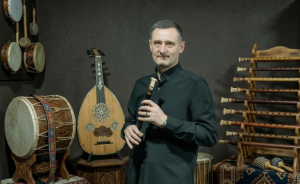
Legendary duduk player Djivan Gasparyan helped introduce the instrument to Western cinema.
Today, the Armenian duduk can be heard in:
Hollywood film soundtracks
- The Last Temptation of Christ (1988) – Composer: Peter Gabriel
- Gladiator (2000) – Composer: Hans Zimmer (Soloist: Djivan Gasparyan)
- Dune (2021) – Composer: Hans Zimmer (Soloist: Pedro Eustache)
Ambient and atmospheric music
- Black Rock (1998) – Djivan Gasparyan & Michael Brook
- Naked Spirit (1998) – Mari Boine (featuring the Duduk)
- Cosmopoly (1999) – Andreas Vollenweider (featuring Djivan Gasparyan)
Videospielmusik
- Outcast (1999) – Composer: Lennie Moore
- Assassin’s Creed Revelations (2011) – Composer: Jesper Kyd & Lorne Balfe
- Total War: Rome II (2013) – Composer: Richard Beddow
World music collaborations
- The Soul of Armenia (2002) – Djivan Gasparyan with various international artists
- Visions from the Past (2005) – Gevorg Dabaghyan
- I Will Not Be Sad in This World (1989) – Djivan Gasparyan (The album that introduced the Duduk to the Western World Music scene)
Contemporary classical compositions
- Symphony No. 3 (1978) – Avet Terteryan (One of the first to integrate Duduk into a Western orchestral setting)
- The Sun, the Wine and the Wind of Time (1998) – Vache Sharafyan (Written for the Silk Road Project)
- Morning Scent of the Acacias’ Song (2001) – Vache Sharafyan (For Duduk, Soprano, and String Orchestra)
Because of its unique tone, the duduk is often used to represent ancient cultures, distant landscapes, or emotional storytelling.
How the Armenian Duduk is Made
Crafting an authentic Armenian duduk is a delicate process that requires both experience and precision. Traditional duduk makers rely on techniques that have been passed down through generations.
Wood Selection
The process begins with meticulously selected apricot wood, which must be seasoned for several years to develop the proper acoustic properties. However, the age and species of the tree alone are not enough to create a master-quality instrument. Only very specific, limited sections of the tree trunk possess the necessary density, grain structure, and resonance required for a professional duduk. An experienced instrument maker often identifies these “special parts” of the wood only after the initial cut, as only they can withstand the extreme vibrations and air pressure necessary to produce the duduk’s characteristic warm sound.
Creating the Inner Resonance Chamber
Once the wood has been shaped into its outer cylindrical form, the interior of the instrument is meticulously hollowed out. This central bore is far more than just an air passage—it is the soul of the duduk. Every tenth of a millimeter determines how warm and pure the instrument will eventually sound.
The Perfection of Intonation
While the external finger holes establish the basic framework for the pitch, the true soul of the duduk’s tuning lies within. After the holes are drilled, the instrument is fine-tuned through the purposeful, manual scraping of the inner walls. It is this precise internal refinement that corrects the vibrational ratios, transforming a simple piece of wood into a professional musical instrument with flawless intonation.
Crafting the Reed (The Ghamish)
The mouthpiece, known as the “beating heart” of the duduk, is critical for an excellent sound and requires both master craftsmanship and perfectly selected reed cane.
Through the expert application of controlled heat and pressure, the reed is shaped with exceptional precision.
This allows the musician to play effortlessly while unfolding the instrument’s full emotional dynamics.
For optimal sound control, the regulator is essential: crafted from the natural bark of the grapevine, it utilizes its characteristic longitudinal fibers for a perfect fit. Only when this regulator sits flush and without gaps against the reed body can the full tonal purity of the duduk be controlled.
Equally important is the custom-fitted cap, which is far more than just a protective cover: it actively bends the reed tips back into their ideal original shape during rest periods. Only through this exact interplay of material density, manual shaping, and functional accessories does the mouthpiece maintain its tension and longevity. This level of artisanal perfection grants every ghamish its unmistakable, deep character and is what makes playing the duduk truly effortless.
The 10-Step Guide: How to Choose Your Perfect Duduk
- Choose the Right Wood: When purchasing, ensure you select high-quality apricot wood that has been seasoned for several years. Only this wood possesses the density required for the authentic, warm sound of the duduk.
- Insist on Master Quality: Avoid cheap souvenir instruments. Instead, invest in a duduk from a renowned instrument maker such as Sevada, MKS, or Sahak, whose signature is often branded or engraved into the wood as a seal of quality.
- Determine the Right Key: For beginners and professionals alike, the Duduk in A is the gold standard. It covers most standard learning materials, offers comfortable finger spacing and a moderate breath requirement, while delivering the deepest, most melancholic sound.
- Check the Grain: Look for a fine, even wood grain without cracks. This indicates that a particularly stable section of the tree trunk was selected for the instrument.
- Examine the Internal Bore: You can recognize a professional duduk by its perfectly smooth internal bore, which has been manually refined to guarantee clean intonation.
- Pay Attention to Ergonomics: The tone holes should be precisely drilled and cleanly finished so that your fingers can create an airtight seal without excessive effort.
- Invest in a QUALITY Mouthpiece (Ghamish): Since the mouthpiece is the “heart” of the instrument, it must be crafted from first-class reed. A masterfully crafted Ghamish typically costs between €60 and €70. Be wary of budget sets (e.g., 3–4 reeds for €40–€50); they are a waste of time and money. For both beginners and advanced players, such reeds are entirely unsuitable: they are often far too difficult to blow, sound tinny, or have excessively wide openings. Furthermore, they are usually made from inferior reed types, making it nearly impossible to produce a clean tone and leading to unnecessary frustration.
Expert Tips for Mouthpieces and Accessories
- Maintain a Selection and Use Our Matching Service: Always have at least 2–3 high-quality mouthpiecesavailable and rotate them regularly. This allows the organic material to dry completely between uses, significantly increasing lifespan and tonal stability. Expert Tip: If you order your mouthpieces directly with a duduk from us, we will personally select the best-harmonizing reeds for your specific instrument. This way, we can guarantee that the pitch and response are 100% perfectly matched to your duduk.
- Trust Your Feeling: Ultimately, every handcrafted duduk is unique. Choose the instrument whose response feels most effortless to you and whose sound, color, grain, and craftsmanship touch you emotionally.
- Get Personal Advice: We take all your wishes, preferences, and experience into account, offering honest and authentic advice—whether on-site in Lippstadt, by phone, email, or WhatsApp. With us, there are no “pigs in a poke”: upon request, we are happy to send you videos of the specific instruments and mouthpieces beforehand, so you know exactly what you are getting. We provide consultation in German, English, and Armenian. Our goal is to work with you to find the perfect combination of duduk and accessories at a fair price—trust in our experience and our solid reputation.
Quality of Craftsmanship
Handcrafted duduks made by experienced craftsmen typically offer better tuning, resonance, and durability than mass-produced instruments.
Reed Quality
Since the reed greatly influences the sound, having a well-crafted reed is essential for producing the authentic duduk tone.
Learning to Play the Armenian Duduk
We don’t just leave you to your own devices after your purchase. To ensure your successful entry and continued development on the duduk, we provide over 250 free instructional videos on YouTube.
For even more targeted progress, we also offer personal online 1:1 training, specifically tailored to the needs of beginners. For advanced players, we are happy to provide individual recommendations for lessons with high-caliber, professional teachers. Our goal is for you to not only own a duduk but to truly learn how to play it.
In the process, many duduk players discover that playing this instrument is not just a technical skill, but a profound form of emotional and musical expression.
The Cultural Soul of Armenia
Beyond its musical characteristics, the Armenian duduk represents something deeper: a connection to the history, landscapes, and emotional memory of Armenia.
For centuries, duduk melodies have accompanied moments of joy, reflection, celebration, and mourning. The instrument’s voice has become inseparable from Armenian identity.
Even as it continues to gain popularity worldwide, the duduk remains rooted in its cultural origins, carrying the spirit of Armenian musical tradition into the modern world.
Conclusion
Die Armenian duduk is far more than a traditional instrument. It is a symbol of history, craftsmanship, and emotional expression.
With its warm tone, centuries-old heritage, and growing global influence, the duduk continues to inspire musicians and listeners alike. Whether performed in traditional Armenian music or modern cinematic compositions, its sound remains timeless and deeply moving.
For anyone seeking an instrument capable of conveying genuine emotion, the Armenian duduk offers a musical voice unlike any other.