Why the Duduk Sounds So Emotional: The Science Behind Its Unique Tone
The duduk is widely recognized for its deeply expressive and almost vocal sound. Listeners across cultures often describe it as melancholic, warm, and profoundly human. This perception is not purely subjective—it can be explained through acoustics, material science, and psychoacoustics.
Rather than relying on vague descriptions, this article breaks down the real, scientifically supported reasons behind the duduk’s emotional tone.
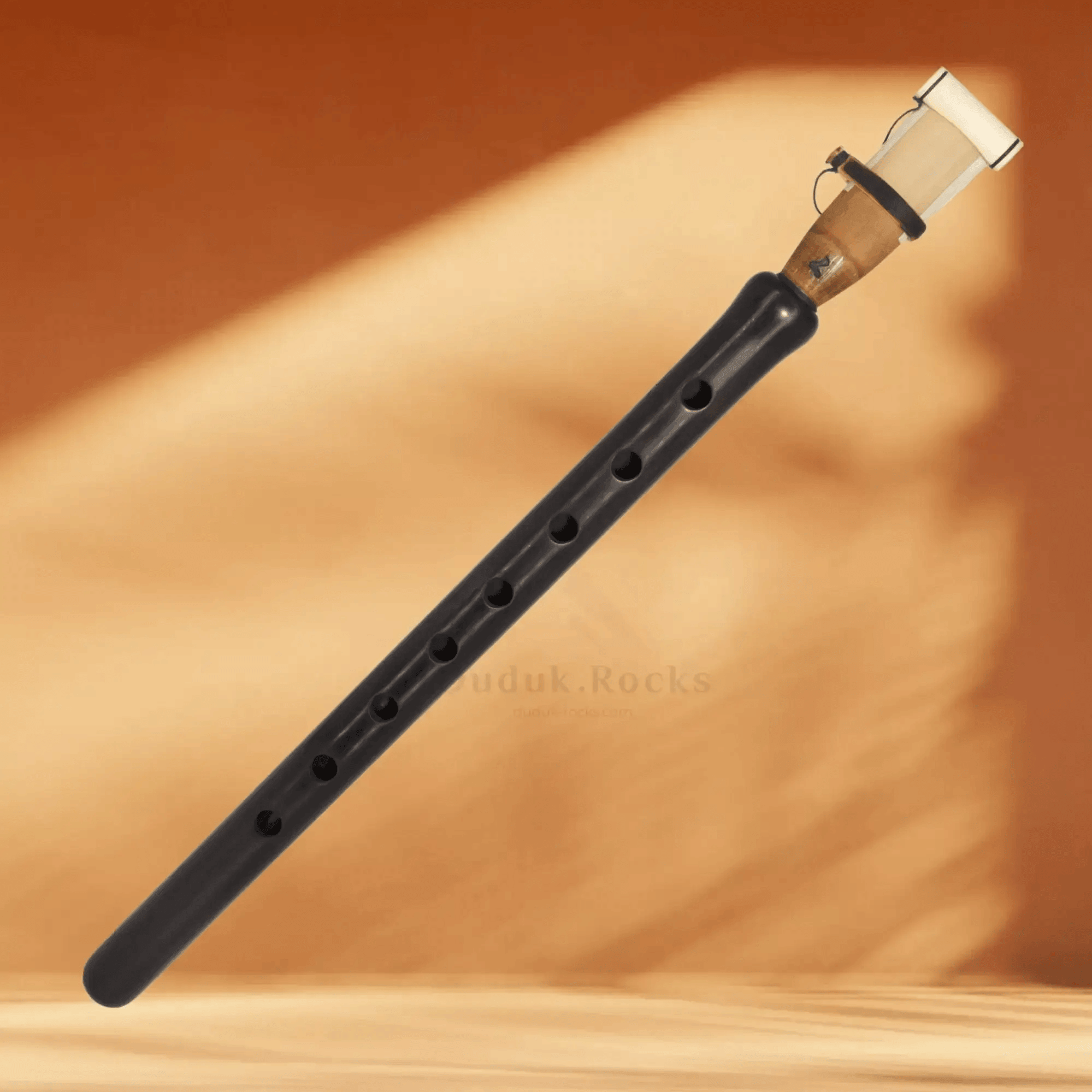
👉 Discover the Armenian Duduk: https://duduk-rocks.com/
👉 Explore more articles: https://duduk-rocks.com/blog/
1. The Double Reed: A Key Acoustic Driver
The duduk belongs to the family of double-reed instruments, similar in principle to the oboe. However, its reed is significantly larger and behaves differently.
Verified acoustic principles:
According to research in musical acoustics (notably by Neville H. Fletcher and Thomas D. Rossing):
- The size and flexibility of a reed directly influence the harmonic content of the sound
- Larger reeds tend to produce lower-frequency dominant tones
- Softer reed vibration results in a less aggressive attack
Application to the duduk:
- The duduk’s wide reed allows greater airflow modulation
- It produces a softer, breath-like onset of sound
- It enables continuous pitch shaping, similar to vocal expression
👉 This is one of the primary reasons the duduk feels “alive” and expressive.
2. Apricot Wood: Measurable Acoustic Properties
The duduk is traditionally made from apricot wood (Prunus armeniaca). This is not only a cultural choice but also an acoustic one.
Material science facts:
Studies in wood acoustics show that:
- Wood density and internal damping affect frequency response
- Woods with higher damping reduce high-frequency overtones
Result for the duduk:
- The sound is less bright and less metallic
- The frequency spectrum emphasizes mid and low ranges
- The tone becomes warm, soft, and rounded
👉 These characteristics align with sounds typically perceived as emotional in human hearing.
3. Cylindrical Bore and Sound Wave Behavior
The internal structure of the duduk is based on a cylindrical bore, meaning the internal diameter remains relatively constant.
Acoustic implications:
- Cylindrical bores favor strong fundamental frequencies
- They produce fewer high-frequency harmonics than conical systems
According to standard acoustics models of wind instruments:
- A stronger fundamental = fuller, more stable tone
- Reduced high harmonics = less sharpness
👉 This contributes directly to the duduk’s smooth and grounded sound.
4. Harmonic Structure and Emotional Perception
Every musical sound contains:
- A fundamental frequency
- A series of harmonics (overtones)
Psychoacoustic research shows:
- Sounds dominated by low and mid frequencies are perceived as:
- warmer
- softer
- more emotional
- Sounds rich in high frequencies are perceived as:
- brighter
- sharper
- more aggressive
(Source domain: psychoacoustics and auditory perception studies)
Duduk characteristics:
- Strong fundamental
- Controlled harmonic spectrum
- Limited high-frequency energy
👉 This explains why the duduk is rarely perceived as harsh, even at higher volumes.
5. Continuous Airflow: Similarity to the Human Voice
One of the most important elements is how the sound is produced.
The duduk relies on:
- Constant airflow
- Breath pressure control
- Often circular breathing techniques
Scientific comparison:
Human speech and singing are based on:
- Continuous airflow
- Smooth transitions between frequencies
The duduk replicates these conditions:
- No abrupt interruptions
- Gradual dynamic variation
- Fluid transitions between notes
👉 This is why the brain interprets the duduk as voice-like rather than purely instrumental.
6. Microtonality: Subtle Pitch Variations
The duduk allows microtonal variation, meaning it can produce pitches between standard Western notes.
Verified perception effect:
Research in auditory perception shows that:
- Small pitch variations increase expressive richness
- The human ear is highly sensitive to micro-deviations in pitch
In practice:
- The player adjusts finger position and breath
- Notes are slightly bent or shaped
- Emotional nuance increases significantly
👉 This mimics natural speech patterns, where pitch is constantly shifting.
7. Sound Envelope: A Soft and Natural Attack
The sound envelope (how a note begins, sustains, and ends) plays a major role in perception.
Duduk characteristics:
- Slow, soft attack
- No sharp onset
- Smooth decay
Psychoacoustic impact:
- Soft attacks are perceived as gentle and natural
- Sharp attacks are perceived as aggressive or mechanical
👉 The duduk’s envelope closely matches that of the human voice, reinforcing its emotional quality.
8. How the Brain Interprets Duduk Sound
Psychoacoustics explains how sound is interpreted emotionally.
Key factors influencing emotional perception:
- Frequency balance
- Harmonic structure
- Continuity of sound
- Dynamic variation
The duduk combines all of them:
- Warm frequency profile
- Stable tone
- Continuous airflow
- Microtonal flexibility
👉 Result: the brain processes the duduk as:
- familiar
- organic
- emotionally expressive
Conclusion: A Scientific Explanation for an Emotional Sound
The emotional impact of the duduk is not accidental or purely cultural. It is the result of a precise combination of physical and acoustic factors:
- A wide and flexible double reed
- Apricot wood with natural damping properties
- Cylindrical bore design
- Dominant low-frequency harmonics
- Continuous airflow similar to vocal production
- Microtonal flexibility
- Soft sound envelope
Together, these elements create a sound that aligns closely with the characteristics of the human voice—explaining why it resonates so deeply with listeners.
FAQ – The Science Behind the Duduk Sound
1. Is there scientific proof that the duduk sounds more emotional?
There is no universal metric for emotion, but its acoustic properties match those known to enhance emotional perception in psychoacoustics.
2. Why does it sound similar to a human voice?
Because it shares key features: continuous airflow, smooth pitch transitions, and a similar frequency range.
3. Does the wood really affect the sound?
Yes. Wood density and internal damping directly influence resonance and frequency response.
4. Is the reed the most important part?
It is essential, but the final sound results from the interaction between the reed and the body.
5. Can other instruments replicate this effect?
Some can approximate it, but the duduk’s specific combination of features is unique.
6. Does player technique matter as much as the instrument?
Yes. Breath control and microtonal precision significantly influence the final sound.