Es befinden sich keine Produkte im Warenkorb.

Share

Why the Duduk Sounds So Emotional: The Science Behind Its Unique Tone

The duduk is widely recognized for its deeply expressive and almost vocal sound. Listeners across cultures often describe it as melancholic, warm, and profoundly human. This perception is not purely subjective—it can be explained through acoustics, material science, and psychoacoustics.

Rather than relying on vague descriptions, this article breaks down the real, scientifically supported reasons behind the duduk’s emotional tone.
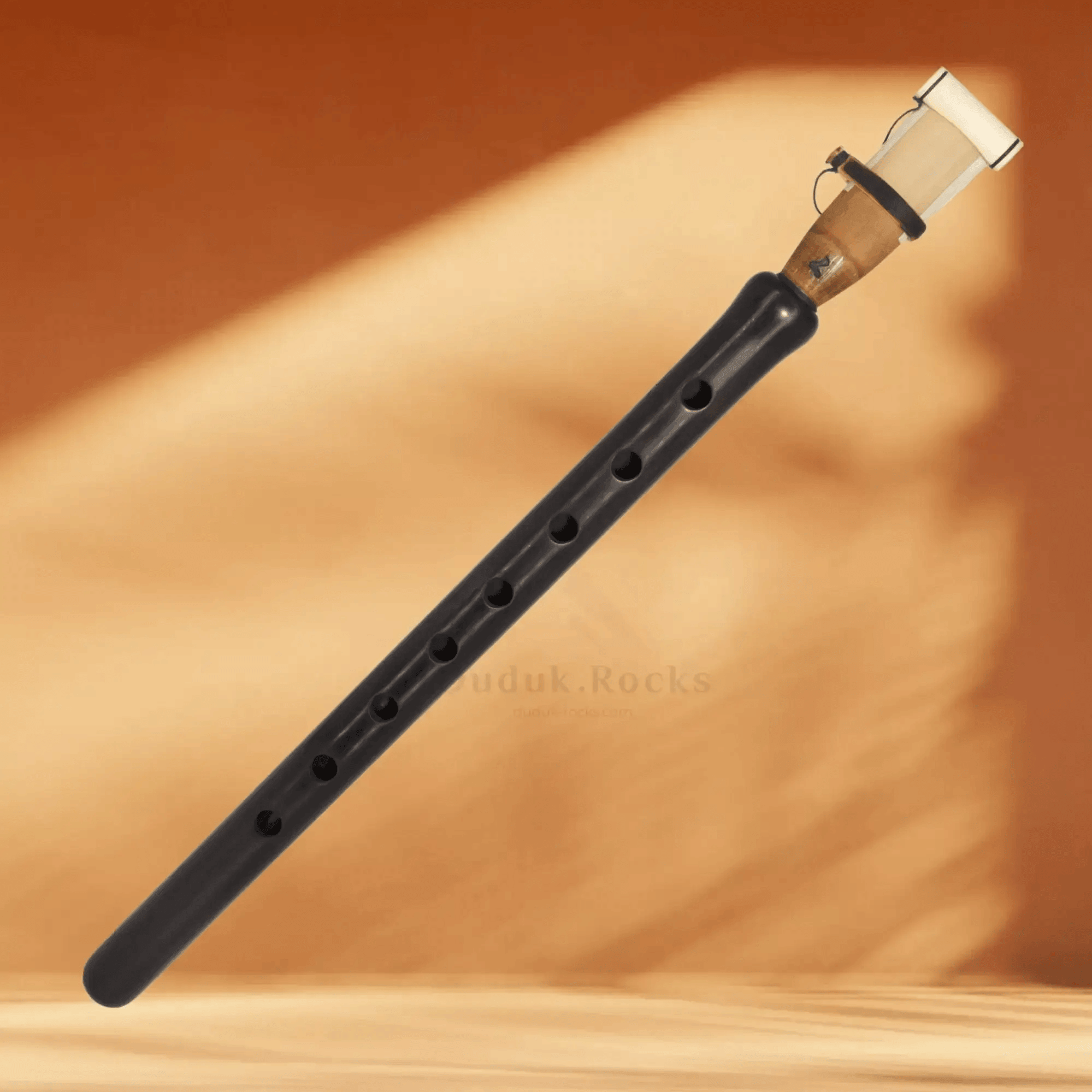
👉 Discover the Armenian Duduk: https://duduk-rocks.com/
👉 Explore more articles: https://duduk-rocks.com/blog/

1. The Double Reed: A Key Acoustic Driver

The duduk belongs to the family of double-reed instruments, similar in principle to the oboe. However, its reed is significantly larger and behaves differently.

Verified acoustic principles:

According to research in musical acoustics (notably by Neville H. Fletcher and Thomas D. Rossing):

  • The size and flexibility of a reed directly influence the harmonic content of the sound
  • Larger reeds tend to produce lower-frequency dominant tones
  • Softer reed vibration results in a less aggressive attack

Application to the duduk:

  • The duduk’s wide reed allows greater airflow modulation
  • It produces a softer, breath-like onset of sound
  • It enables continuous pitch shaping, similar to vocal expression

👉 This is one of the primary reasons the duduk feels “alive” and expressive.

2. Apricot Wood: Measurable Acoustic Properties

The duduk is traditionally made from apricot wood (Prunus armeniaca). This is not only a cultural choice but also an acoustic one.

Material science facts:

Studies in wood acoustics show that:

  • Wood density and internal damping affect frequency response
  • Woods with higher damping reduce high-frequency overtones

Result for the duduk:

  • The sound is less bright and less metallic
  • The frequency spectrum emphasizes mid and low ranges
  • The tone becomes warm, soft, and rounded

👉 These characteristics align with sounds typically perceived as emotional in human hearing.

3. Cylindrical Bore and Sound Wave Behavior

The internal structure of the duduk is based on a cylindrical bore, meaning the internal diameter remains relatively constant.

Acoustic implications:

  • Cylindrical bores favor strong fundamental frequencies
  • They produce fewer high-frequency harmonics than conical systems

According to standard acoustics models of wind instruments:

  • A stronger fundamental = fuller, more stable tone
  • Reduced high harmonics = less sharpness

👉 This contributes directly to the duduk’s smooth and grounded sound.

4. Harmonic Structure and Emotional Perception

Every musical sound contains:

  • A fundamental frequency
  • A series of harmonics (overtones)

Psychoacoustic research shows:

  • Sounds dominated by low and mid frequencies are perceived as:
    • warmer
    • softer
    • more emotional
  • Sounds rich in high frequencies are perceived as:
    • brighter
    • sharper
    • more aggressive

(Source domain: psychoacoustics and auditory perception studies)

Duduk characteristics:

  • Strong fundamental
  • Controlled harmonic spectrum
  • Limited high-frequency energy

👉 This explains why the duduk is rarely perceived as harsh, even at higher volumes.

5. Continuous Airflow: Similarity to the Human Voice

One of the most important elements is how the sound is produced.

The duduk relies on:

  • Constant airflow
  • Breath pressure control
  • Often circular breathing techniques

Scientific comparison:

Human speech and singing are based on:

  • Continuous airflow
  • Smooth transitions between frequencies

The duduk replicates these conditions:

  • No abrupt interruptions
  • Gradual dynamic variation
  • Fluid transitions between notes

👉 This is why the brain interprets the duduk as voice-like rather than purely instrumental.

6. Microtonality: Subtle Pitch Variations

The duduk allows microtonal variation, meaning it can produce pitches between standard Western notes.

Verified perception effect:

Research in auditory perception shows that:

  • Small pitch variations increase expressive richness
  • The human ear is highly sensitive to micro-deviations in pitch

In practice:

  • The player adjusts finger position and breath
  • Notes are slightly bent or shaped
  • Emotional nuance increases significantly

👉 This mimics natural speech patterns, where pitch is constantly shifting.

7. Sound Envelope: A Soft and Natural Attack

The sound envelope (how a note begins, sustains, and ends) plays a major role in perception.

Duduk characteristics:

  • Slow, soft attack
  • No sharp onset
  • Smooth decay

Psychoacoustic impact:

  • Soft attacks are perceived as gentle and natural
  • Sharp attacks are perceived as aggressive or mechanical

👉 The duduk’s envelope closely matches that of the human voice, reinforcing its emotional quality.

8. How the Brain Interprets Duduk Sound

Psychoacoustics explains how sound is interpreted emotionally.

Key factors influencing emotional perception:

  • Frequency balance
  • Harmonic structure
  • Continuity of sound
  • Dynamic variation

The duduk combines all of them:

  • Warm frequency profile
  • Stable tone
  • Continuous airflow
  • Microtonal flexibility

👉 Result: the brain processes the duduk as:

  • familiar
  • organic
  • emotionally expressive

Conclusion: A Scientific Explanation for an Emotional Sound

The emotional impact of the duduk is not accidental or purely cultural. It is the result of a precise combination of physical and acoustic factors:

  • A wide and flexible double reed
  • Apricot wood with natural damping properties
  • Cylindrical bore design
  • Dominant low-frequency harmonics
  • Continuous airflow similar to vocal production
  • Microtonal flexibility
  • Soft sound envelope

Together, these elements create a sound that aligns closely with the characteristics of the human voice—explaining why it resonates so deeply with listeners.

FAQ – The Science Behind the Duduk Sound

1. Is there scientific proof that the duduk sounds more emotional?
There is no universal metric for emotion, but its acoustic properties match those known to enhance emotional perception in psychoacoustics.

2. Why does it sound similar to a human voice?
Because it shares key features: continuous airflow, smooth pitch transitions, and a similar frequency range.

3. Does the wood really affect the sound?
Yes. Wood density and internal damping directly influence resonance and frequency response.

4. Is the reed the most important part?
It is essential, but the final sound results from the interaction between the reed and the body.

5. Can other instruments replicate this effect?
Some can approximate it, but the duduk’s specific combination of features is unique.

6. Does player technique matter as much as the instrument?
Yes. Breath control and microtonal precision significantly influence the final sound.


We use cookies to optimize our website and provide you with the best possible user experience. By continuing to use our site, you consent to the use of cookies. Learn more. View more
Cookies settings
Accept
Privacy & Cookie policy
Privacy & Cookies policy
Cookie name Active
Privacy Policy 1. Controller The controller responsible for data processing on this website within the meaning of the General Data Protection Regulation (GDPR) is: Duduk-Rocks GbR Artur Demurchyan Andersen Str. 10a 59557 Lippstadt Germany Phone: +49 159-04099627 Email: info@duduk-rocks.com 2. Collection and Storage of Personal Data and the Nature and Purpose of their Use a) When visiting the website When you visit our website www.duduk-rocks.com, www.dudukrocks.com or www.duduk.rocks, the browser used on your device automatically sends information to the server of our website. This information is temporarily stored in a so-called log file. The following information is collected without your intervention and stored until automated deletion:
    • IP address of the requesting computer
    • Date and time of access
    • Name and URL of the retrieved file
    • Website from which access is made (referrer URL)
    • Used browser and, if applicable, the operating system of your computer as well as the name of your access provider
The mentioned data is processed by us for the following purposes:
    • Ensuring a smooth connection setup of the website
    • Ensuring comfortable use of our website
    • Evaluation of system security and stability as well as for further administrative purposes
The legal basis for data processing is Art. 6 para. 1 sentence 1 lit. f GDPR. Our legitimate interest follows from the purposes listed above for data collection. In no case do we use the collected data for the purpose of drawing conclusions about your person. b) When using our contact form If you have any questions, we offer you the opportunity to contact us via a form provided on the website. It is necessary to provide a valid email address so that we know who the request is from and to be able to respond to it. Further information can be provided voluntarily. Data processing for the purpose of contacting us is based on your voluntarily given consent pursuant to Art. 6 para. 1 sentence 1 lit. a GDPR. The personal data collected by us for the use of the contact form will be automatically deleted after the request you have made is completed. 3. Data Disclosure Your personal data will not be transferred to third parties for purposes other than those listed below. We will only share your personal data with third parties if:
    • You have given your express consent pursuant to Art. 6 para. 1 sentence 1 lit. a GDPR,
    • the disclosure is necessary for the establishment, exercise or defense of legal claims pursuant to Art. 6 para. 1 sentence 1 lit. f GDPR and there is no reason to assume that you have an overriding legitimate interest in not disclosing your data,
    • in the event that there is a legal obligation for the disclosure pursuant to Art. 6 para. 1 sentence 1 lit. c GDPR, and
    • it is legally permissible and required for the performance of a contract with you pursuant to Art. 6 para. 1 sentence 1 lit. b GDPR.
4. Rights of Data Subjects You have the right:
    • pursuant to Art. 15 GDPR to request information about your personal data processed by us. In particular, you can request information about the processing purposes, the category of personal data, the categories of recipients to whom your data has been or will be disclosed, the planned storage period, the existence of a right to rectification, erasure, restriction of processing or objection, the existence of a right to lodge a complaint, the source of your data, if it was not collected by us, as well as the existence of automated decision-making including profiling and, if applicable, meaningful information about its details;
    • pursuant to Art. 16 GDPR to request the rectification of incorrect or the completion of your personal data stored by us without undue delay;
    • pursuant to Art. 17 GDPR to request the erasure of your personal data stored by us, unless the processing is necessary for the exercise of the right to freedom of expression and information, for the fulfillment of a legal obligation, for reasons of public interest or for the establishment, exercise or defense of legal claims;
    • pursuant to Art. 18 GDPR to request the restriction of the processing of your personal data, insofar as the accuracy of the data is disputed by you, the processing is unlawful, but you oppose its erasure and we no longer need the data, but you need it for the establishment, exercise or defense of legal claims or you have objected to the processing pursuant to Art. 21 GDPR;
    • pursuant to Art. 20 GDPR to receive your personal data, which you have provided to us, in a structured, commonly used and machine-readable format or to request the transfer to another controller;
    • pursuant to Art. 7 para. 3 GDPR to withdraw your consent at any time. As a result, we may no longer continue the data processing based on this consent for the future and
    • pursuant to Art. 77 GDPR to lodge a complaint with a supervisory authority. As a rule, you can contact the supervisory authority of your usual place of residence or workplace or our company headquarters.
5. Right to Object If your personal data is processed based on legitimate interests pursuant to Art. 6 para. 1 sentence 1 lit. f GDPR, you have the right to object to the processing of your personal data pursuant to Art. 21 GDPR, insofar as there are reasons for this arising from your particular situation or the objection is directed against direct marketing. In the latter case, you have a general right to object, which we will implement without specifying a particular situation. If you wish to exercise your right to withdraw or object, just send an email to info@duduk-rocks.com. 6. Data Security We use the widespread SSL (Secure Socket Layer) procedure in connection with the highest encryption level supported by your browser when you visit the website. Typically, this is 256-bit encryption. If your browser does not support 256-bit encryption, we use 128-bit v3 technology instead. You can tell whether a single page of our website is transmitted in encrypted form by the closed display of the key or lock symbol in the lower status bar of your browser. We also use appropriate technical and organizational security measures to protect your data against accidental or intentional manipulation, partial or complete loss, destruction or unauthorized access by third parties. Our security measures are continuously improved in line with technological developments. 7. Validity and Changes to this Privacy Policy This privacy policy is currently valid and was last updated in July 2024. Due to the further development of our website and offers above or due to changed legal or official requirements, it may be necessary to change this privacy policy. The current privacy policy can be viewed and printed by you at any time on the website at www.duduk-rocks.com. 8. Cookies We use cookies on our website. Cookies are small files that your browser automatically creates and that are stored on your device (laptop, tablet, smartphone, etc.) when you visit our site. Cookies do not harm your device and do not contain viruses, trojans, or other malicious software. Information is stored in the cookie, which results in each case in connection with the specific device used. However, this does not mean that we are immediately aware of your identity. The use of cookies serves to make the use of our offer more pleasant for you. For example, we use session cookies to recognize that you have already visited individual pages of our website. These are automatically deleted after leaving our site. In addition, we also use temporary cookies to optimize user-friendliness, which are stored on your device for a certain fixed period. If you visit our site again to use our services, it is automatically recognized that you have already been with us and what entries and settings you have made, so you do not have to enter them again. We also use cookies to statistically record the use of our website and to evaluate it for you for the purpose of optimizing our offer (see Section 5). These cookies enable us to recognize automatically when you visit our site again that you have already been with us. These cookies are automatically deleted after a defined period. The data processed by cookies are necessary for the purposes mentioned to protect our legitimate interests as well as those of third parties according to Art. 6 para. 1 sentence 1 lit. f GDPR. Most browsers accept cookies automatically. However, you can configure your browser so that no cookies are stored on your computer or a message always appears before a new cookie is created. However, completely disabling cookies may mean that you cannot use all the functions of our website. For more information on the cookies we use and to manage your cookie preferences, please visit our [Cookie Policy] (Link to Cookie Policy).
Save settings
Cookies settings