Karen Mukayelyan: The Armenian Duduk Maker Behind World-Class Handmade Instruments
Every exceptional musical instrument begins with a skilled craftsperson.
While performers often receive public recognition for their artistry, the quality of their music depends just as much on the instrument in their hands. This is especially true for the Armenian duduk, where even small differences in wood selection, bore dimensions, finger-hole placement, and reed adjustment can significantly influence tone, intonation, and responsiveness.
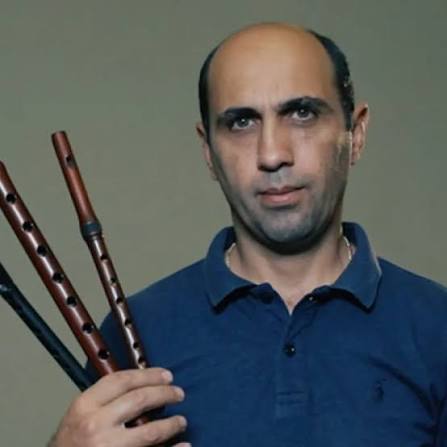
Among today’s respected Armenian duduk makers, Karen Mukayelyan has earned recognition for producing carefully handcrafted instruments that are played by professional musicians in Armenia and internationally. His work reflects a commitment to traditional Armenian craftsmanship while meeting the expectations of modern performers seeking reliability, precision, and expressive sound.
Rather than relying on mass production, each instrument is individually crafted and adjusted, preserving the long-standing traditions that have shaped Armenian duduk making for generations.
In this article, we explore Karen Mukayelyan’s work, the craftsmanship behind his instruments, and the qualities that distinguish a professionally handmade Armenian duduk.
👉 Discover the Armenian Duduk: https://duduk-rocks.com/
👉 Explore more articles: https://duduk-rocks.com/blog/
The Importance of the Instrument Maker
When people begin learning about the Armenian duduk, they often focus on the musician.
However, experienced performers know that the instrument maker plays an equally important role.
A well-crafted duduk should provide:
- Stable intonation
- Comfortable finger spacing
- Balanced airflow
- Consistent response
- Rich harmonic content
- Long-term structural stability
Achieving these qualities requires extensive experience.
Unlike factory-produced instruments, handmade duduks demand careful attention throughout every stage of production. Small variations measured in fractions of a millimeter can noticeably affect the finished instrument.
For this reason, professional musicians frequently develop long-term relationships with individual makers whose work they trust.
Karen Mukayelyan’s Approach to Craftsmanship
Karen Mukayelyan belongs to the tradition of Armenian craftsmen who continue producing duduks by hand.
His work emphasizes several principles that are widely recognized among experienced instrument makers.
Carefully Selected Wood
The quality of any duduk begins with its wood.
Karen Mukayelyan works with carefully selected apricot wood that has been properly seasoned before carving begins.
Well-seasoned wood offers several advantages:
- Greater stability
- Reduced risk of cracking
- Improved resonance
- Better long-term durability
Proper seasoning cannot be rushed. It requires time and careful storage conditions before the wood becomes suitable for instrument making.
Precision Before Decoration
Although a beautifully finished instrument is visually appealing, appearance alone does not determine quality.
Karen Mukayelyan’s instruments are appreciated primarily for their acoustic performance rather than decorative features.
During construction, attention is given to:
- Internal bore dimensions
- Hole placement
- Wall thickness
- Reed fitting
- Inner Tuning
- optimal airflow
- Overall balance
These structural details influence how naturally the instrument responds to the player.
More Than the Duduk: A Full Range of Armenian Wind Instruments
While the duduk is the instrument most closely associated with his name, Karen Mukayelyan’s workshop produces the wider family of traditional Armenian woodwinds. Alongside duduks in all common keys, he crafts the Blul (also known as Sring), the Shvi, the Pku, and the Zurna, each built in a range of tunings and configurations.
This breadth matters more than it might first appear. Every one of these instruments follows its own acoustic logic: the Blul is an end-blown flute requiring an entirely different bore profile, the Shvi produces its sound through a bevelled mouthpiece, the Pku and Zurna rely on their own reed systems and demand a different approach to tuning altogether. Mastering all of them within a single workshop requires an understanding of Armenian wind instruments as a whole, not just a single well-practised routine.
Among professional Armenian musicians, this consistency has made his instruments a first-choice option. Players who perform, record, and teach on these instruments daily tend to be uncompromising in their standards, and their continued preference for MKS instruments across the entire family of Armenian woodwinds says more about the quality of the work than any description could.
Honored as a “People’s Master” of Armenian Craftsmanship
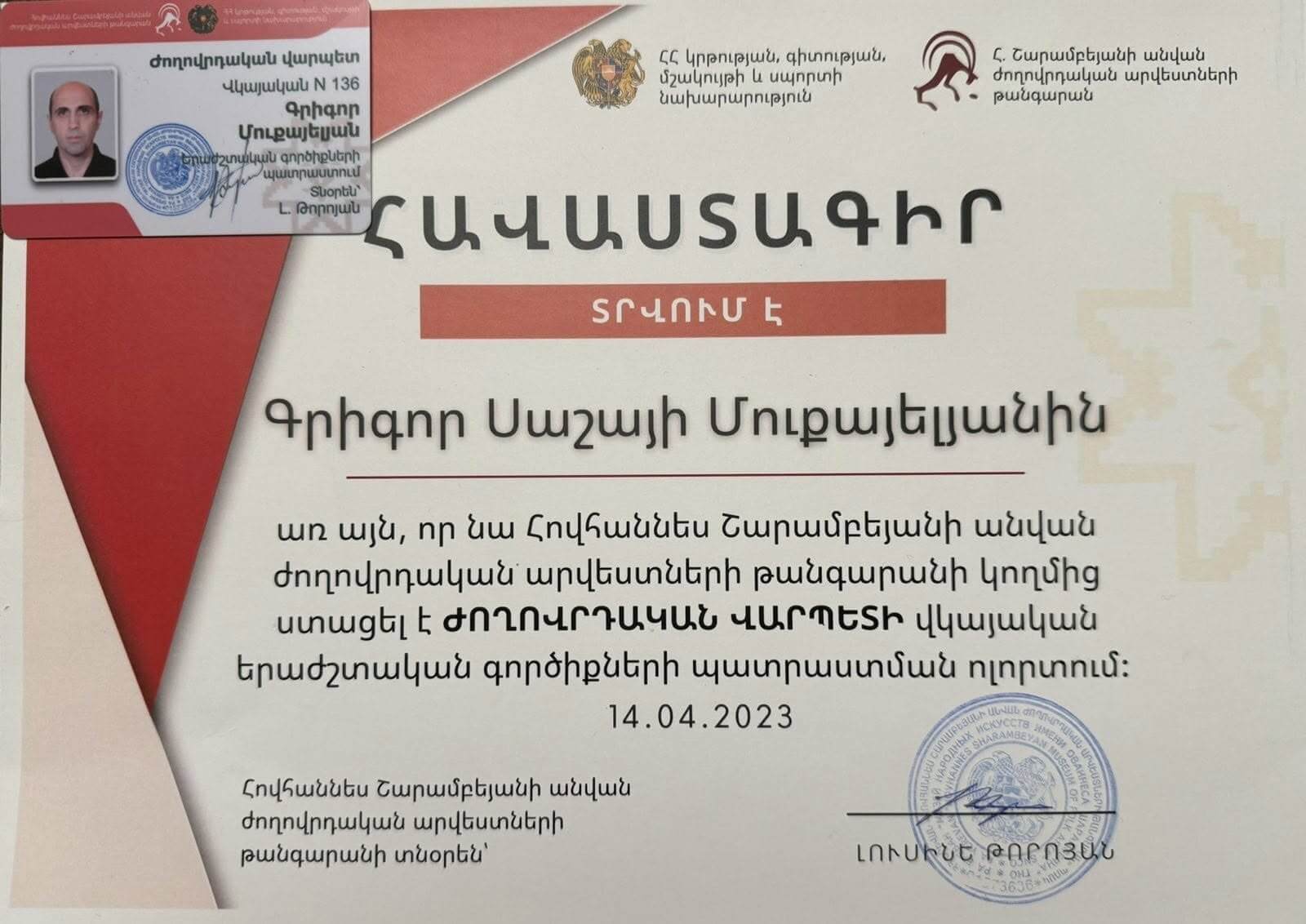
The high quality of Karen Mukayelyan’s MKS instruments is not just praised by musicians—it is also officially recognized by the Armenian state. In 2023, the Armenian Ministry of Culture awarded him the prestigious title of “People’s Master” (Ժողովրդական Վարպետ).
This special honor is given only to the finest craftsmen who keep traditional Armenian arts alive, such as carpet weaving, cross-stone carving, and instrument making. For Mukayelyan, this title is a wonderful proof of his skill. It shows that every duduk made under his MKS brand is crafted with deep respect for Armenian tradition and built to the highest quality.
Why Handmade Duduks Matter
Modern manufacturing can produce many excellent musical instruments, but the Armenian duduk remains closely connected to traditional handcrafting.
There are several reasons for this.
Individual Adjustment
Every piece of apricot wood behaves slightly differently.
Experienced makers evaluate each blank individually before determining final dimensions.
Rather than forcing identical specifications onto every instrument, adjustments may be made according to the unique characteristics of the wood.
Fine Acoustic Tuning
After carving, the instrument undergoes extensive testing.
The maker checks:
- Pitch accuracy
- Response
- Air resistance
- Tone consistency
- Balance across the full range
This stage often requires multiple refinements before the instrument is considered complete.
The outer shaping of the duduk’s body, as well as the drilling of the finger holes, can today be carried out with the help of automated tools, since these steps largely follow fixed, repeatable measurements.
The actual tuning, however, cannot be automated in the same way. It is achieved by carefully scraping and reaming out specific areas inside the bore, gradually adjusting the internal diameter at precise points along its length. This internal work directly shapes the instrument’s resonance, pitch accuracy, and harmonic character. Because every blank of apricot wood differs slightly in density and grain, this step relies on the maker’s ear and experience rather than fixed measurements:
the process typically involves repeated cycles of scraping, test-playing, and listening, until the duduk produces the warm, full tone the instrument is known for. Only after this hand-finished internal tuning does a duduk truly “come alive” acoustically, which is why even makers who use modern tools for the preliminary shaping still carry out this final, decisive step by hand.
Even when a duduk is correctly tuned and produces the right notes, both experienced players and beginners can sense that instruments differ in how the sound is produced, and above all, in how easily it responds. Two duduks can share the same pitch accuracy on paper, yet one may demand noticeably more breath control and effort, while the other feels natural and responsive under the player’s embouchure from the very first note. This subtle quality, often described by musicians as the “ease of play,” goes beyond mere tuning correctness. It is precisely this refinement that separates the work of experienced duduk masters from technically correct but less inspired craftsmanship, and it remains one of the most closely guarded aspects of their expertise.
This is why MKS duduks by Karen Mukayelyan enjoy such great respect among musicians worldwide.
The Choice of Apricot Wood
One characteristic that immediately distinguishes the Armenian duduk from many other regional double-reed instruments is its traditional use of apricot wood.
The Armenian name Tsiranapogh literally refers to an “apricot wood wind instrument.”
Apricot wood is valued because it combines:
- Appropriate density
- Excellent resonance
- Good workability
- Long-term stability when properly seasoned
These properties contribute to the warm, mellow tone that listeners associate with the Armenian duduk.
UNESCO also identifies apricot wood as the traditional material used in authentic Armenian duduk construction.
Craftsmanship Passed Through Generations
The Armenian tradition of duduk making extends far beyond producing a musical instrument.
Knowledge is transmitted through observation, experience, and continuous refinement.
Instrument makers learn to recognize:
- Suitable wood grain
- Moisture levels
- Acoustic behavior
- Reed response
- Fine tuning techniques
This accumulated knowledge cannot be replaced simply by machines or measurements.
Each generation contributes to preserving techniques while adapting to the needs of contemporary musicians.
Why Musicians Choose Handmade Instruments
Professional performers often prefer handmade duduks because they offer:
- Greater tonal richness
- Better responsiveness
- More consistent intonation
- Improved control
- Greater expressive possibilities
Although two instruments may appear similar externally, experienced players quickly notice differences in comfort, balance, and sound.
For many musicians, investing in a carefully handcrafted instrument supports both artistic performance and the preservation of Armenian musical heritage.
Karen Mukayelyan’s Instruments Around the World
Although the Armenian duduk has its deepest roots in Armenia, interest in the instrument has expanded significantly over the past few decades. Today, musicians from Europe, North America, Asia, Australia, and South America are discovering Armenian music and seeking authentic handmade instruments.
As this international community has grown, experienced instrument makers such as Karen Mukayelyan have become known beyond Armenia for producing professionally crafted duduks that reflect traditional Armenian craftsmanship.
Many musicians choose a handmade instrument not simply because it is made by hand, but because they are looking for:
- Reliable tuning
- Consistent response
- Rich tonal character
- Comfortable finger spacing
- Long-term durability
- An instrument built according to traditional Armenian methods
For professional performers, these qualities become especially important during concerts, studio recordings, and teaching.
From the Workshop to the Musician
Building a duduk is only part of the process.
Once an instrument is completed, it must be tested to ensure that it performs consistently across its range.
Experienced makers evaluate factors such as:
- Overall intonation
- Air resistance
- Finger-hole balance
- Tone consistency
- Response in both lower and upper registers
- Compatibility with properly adjusted reeds
Only after these final evaluations is the instrument ready for musicians.
Unlike factory production, where every instrument follows the same manufacturing process, handcrafted duduks often receive individual adjustments based on the acoustic characteristics of each piece of wood.
This attention to detail is one reason professional musicians frequently prefer instruments made by experienced Armenian craftsmen.
Choosing a Professional Handmade Duduk
Whether purchasing a first instrument or upgrading to a professional model, selecting a handmade duduk involves more than choosing a key.
Several factors deserve careful consideration.
Quality of the Wood
The wood should be properly seasoned before construction.
Well-seasoned apricot wood contributes to:
- Structural stability
- Better resonance
- Reduced risk of cracking
- Greater longevity
Fresh or poorly dried wood may become unstable over time.
Precision of Construction
A quality duduk should demonstrate careful workmanship throughout.
Important characteristics include:
- Smooth internal bore
- Accurate finger-hole placement
- Comfortable spacing
- Balanced airflow
- Consistent tuning
These details directly influence the playing experience.
Reputation of the Maker
For many performers, choosing the right maker is as important as choosing the instrument itself.
Experienced craftsmen develop their own methods through years of practice.
Their reputation often reflects:
- Consistency
- Reliability
- Attention to detail
- Customer feedback
- Long-term experience
When investing in a handmade instrument, learning about the maker’s work can help musicians make informed decisions.
Caring for a Handmade Duduk
A professionally crafted duduk can last for many decades when properly maintained.
Basic care includes:
Store the Instrument Safely
Keep the duduk in a protective case when not in use.
Avoid exposing it to:
- Direct sunlight
- Excessive heat or frost
- Very dry or humidity environments
- Sudden temperature changes
These conditions can affect natural wood over time.
Dry the Reed After Playing
After each practice session:
- Remove the reed.
- Allow it to dry naturally.
- Store it carefully.
Proper reed care helps preserve both response and longevity.
Preserving an Armenian Craft Tradition
Every handmade duduk represents far more than a finished musical instrument.
It reflects generations of accumulated knowledge involving:
- Wood selection
- Traditional tools
- Acoustic understanding
- Musical experience
- Fine craftsmanship
Although modern technology has introduced new measuring tools and equipment, much of the final adjustment still depends on the maker’s experience, hearing, and craftsmanship.
This combination of tradition and precision helps explain why handcrafted Armenian duduks continue to be valued by musicians around the world.
Frequently Asked Questions
Who is Karen Mukayelyan?
Karen Mukayelyan is an Armenian instrument maker MKS recognized for producing handcrafted duduks using traditional construction methods and carefully selected materials. Beyond the duduk, he also crafts other traditional Armenian wind instruments including the Blul (Sring), Shvi, Pku, and Zurna, and his work is widely regarded as a first choice among professional Armenian musicians.
Why do professional musicians choose handmade duduks?
Handmade instruments often provide more refined tuning, better responsiveness, richer tone, and greater consistency than mass-produced alternatives.
What wood does Karen Mukayelyan use?
Like traditional Armenian duduk makers, his instruments are crafted from seasoned apricot wood, the material historically associated with authentic Armenian duduks.
Does the maker influence the sound?
Yes.
The maker’s choices regarding wood selection, bore dimensions, finger-hole placement, and finishing all influence the instrument’s response and tonal characteristics.
Can beginners start with a handmade duduk?
Absolutely.
Many students benefit from learning on a well-made instrument because accurate tuning and reliable response make practice more enjoyable and help develop good technique from the beginning.
How long can a handmade duduk last?
With proper care, a professionally handcrafted duduk can remain playable for many years. Regular maintenance, careful storage, and appropriate reed care all contribute to its longevity.
Continue Exploring Duduk Rocks
If you would like to learn more about the Armenian duduk and its craftsmanship, continue with these guides:
- What Is a Duduk? A Complete Guide to Armenia’s Most Expressive Wind Instrument
- Armenian Duduk: History, Sound, Craftsmanship, and Cultural Significance
- Armenian Duduk Craftsmanship
- From Tree to Instrument: The Journey of a Handmade Duduk
- Duduk Reed Explained
- Duduk Mouthpiece Guide
- Armenian Musical Instruments: Discover the Traditional Instruments That Shaped Armenia’s Musical Heritage
- Middle Eastern Reed Instruments: How the Armenian Duduk Stands Apart
Together, these articles provide a comprehensive understanding of the Armenian duduk—from its history and construction to the skilled craftspeople who continue to preserve this remarkable musical tradition.
Conclusion
The quality of an Armenian duduk depends not only on the musician who performs it but also on the craftsperson who creates it.
Karen Mukayelyan represents a tradition of Armenian instrument making in which patience, precision, and experience remain central to every stage of construction. Through careful wood selection, detailed acoustic adjustment, and respect for traditional methods, his work contributes to preserving one of Armenia’s most iconic musical instruments.
For musicians seeking an authentic handmade duduk, understanding the maker’s role is an essential part of appreciating the instrument itself. Every professionally crafted duduk carries not only the sound of apricot wood and a carefully adjusted reed, but also the accumulated knowledge of generations of Armenian craftsmanship.
Whether you are an experienced performer, a student beginning your journey, or simply someone fascinated by Armenian culture, learning about the people behind these instruments offers a deeper appreciation of the artistry that makes the duduk one of the world’s most expressive wind instruments.