Es befinden sich keine Produkte im Warenkorb.

Share

Sahak Gasparyan: Master of the Armenian Duduk and Guardian of a Timeless Tradition

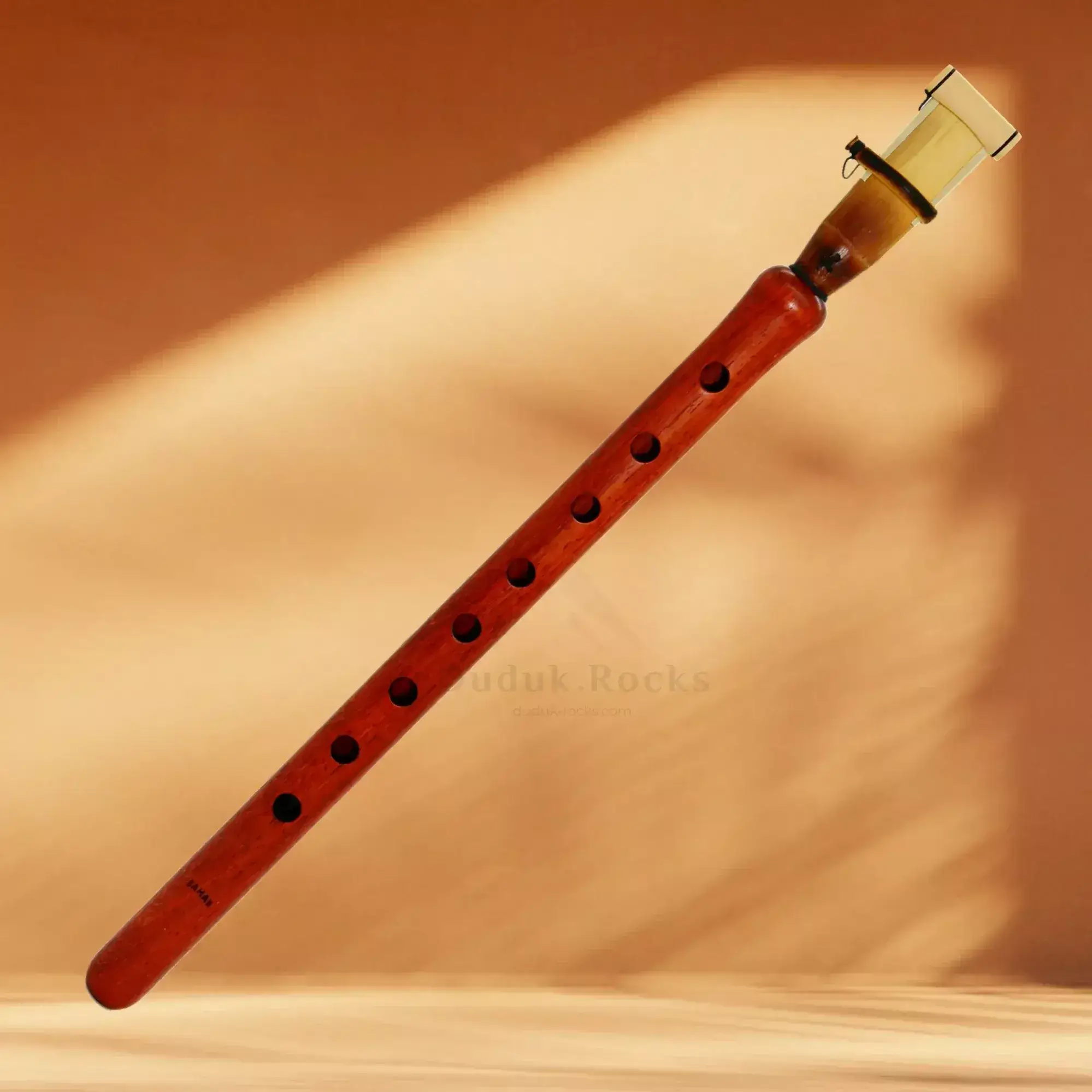
The Armenian duduk is widely recognized for its deep, expressive sound—often described as one of the most emotional voices in traditional music. Among the musicians dedicated to preserving and elevating this instrument, Sahak Gasparyan stands out as a respected performer and educator whose work reflects both technical mastery and cultural commitment.

This article presents a clear and factual overview of his role in the world of duduk, focusing on his musicianship, contributions to tradition, and impact on the transmission of this heritage.
👉 Discover the Armenian Duduk: https://duduk-rocks.com/
👉 Explore more articles: https://duduk-rocks.com/blog/

1. The Duduk: A Cultural Instrument of Armenia

Before understanding the importance of Gasparyan’s work, it is essential to situate the duduk within its cultural context.

The duduk is:

  • A double-reed woodwind instrument traditionally made from apricot wood
  • Central to Armenian musical identity
  • Used in both folk traditions and contemporary compositions

In 2005, the duduk and its music were inscribed by UNESCO on the Representative List of the Intangible Cultural Heritage of Humanity, recognizing its cultural significance and the need for preservation.

This recognition highlights the importance of musicians who actively contribute to keeping the tradition alive.

2. Musical Approach and Technical Mastery

Sahak Gasparyan is known for a playing style that emphasizes:

  • Controlled breath technique
  • Stable intonation
  • Expressive phrasing

The duduk requires advanced breath control due to its wide reed and resistance. Mastery of this technique allows the musician to sustain long, continuous tones and subtle dynamic variations.

His performances demonstrate:

  • Consistency in tone production
  • Clarity across registers
  • Respect for traditional ornamentation

These elements are essential in maintaining the authenticity of duduk performance practice.

3. Role as a Cultural Transmitter

Beyond performance, Gasparyan contributes to the transmission of knowledge associated with the duduk.

This includes:

  • Teaching students the fundamentals of the instrument
  • Preserving traditional repertoire
  • Maintaining stylistic integrity

The transmission of duduk music is largely oral, meaning that techniques and interpretations are passed directly from teacher to student. This makes the role of experienced musicians particularly important in ensuring continuity.

4. Contribution to Modern Exposure of the Duduk

The duduk has expanded beyond its traditional context and is now present in:

  • Film soundtracks
  • International performances
  • Cross-cultural collaborations

Musicians like Sahak Gasparyan participate in this evolution by adapting the instrument to new contexts while preserving its original identity.

This balance between tradition and adaptation is critical:

  • Too much modification risks losing authenticity
  • Too little openness limits the instrument’s reach

His work reflects a controlled integration of both aspects.

5. Challenges in Preserving the Duduk Tradition

The preservation of duduk music faces several real challenges:

  • Decline in traditional apprenticeship models
  • Globalization of music styles
  • Variation in instrument quality

Maintaining high standards requires:

  • Skilled teachers
  • Access to well-crafted instruments
  • Continued interest from new generations

Musicians dedicated to the tradition play a key role in addressing these challenges.

6. The Importance of Authenticity in Duduk Performance

Authenticity in duduk performance is defined by several factors:

  • Respect for traditional scales and modes
  • Proper use of ornamentation
  • Control of vibrato and dynamics

Sahak Gasparyan’s approach aligns with these principles, contributing to the preservation of stylistic accuracy.

It is important to note that variations exist between players and regions, but core techniques remain consistent within the tradition.

Conclusion: A Measured Contribution to a Living Tradition

Sahak Gasparyan represents a category of musicians whose role extends beyond performance. Through technical discipline, teaching, and respect for tradition, his work contributes to the continuity of the Armenian duduk.

The preservation of such an instrument depends not only on recognition but on consistent, high-quality practice and transmission. In this context, dedicated musicians remain essential to maintaining the integrity of this cultural heritage.

FAQ – Duduk and Musical Tradition

1. What makes the duduk unique compared to other woodwinds?
Its large reed and apricot wood body produce a warm, deep tone that differs significantly from instruments like the clarinet or oboe.

2. Why is breath control important in duduk playing?
The instrument requires sustained airflow to maintain stable sound and dynamic control.

3. Is duduk music written or transmitted orally?
Traditionally, it is transmitted orally, though modern notation is sometimes used.

4. What challenges affect the preservation of the duduk?
Globalization, reduced traditional training, and variations in instrument quality.

5. Can the duduk be used in modern music?
Yes, it is increasingly used in film and contemporary compositions.

6. Is learning the duduk difficult?
It requires time and practice, particularly for breath control and tone production.


We use cookies to optimize our website and provide you with the best possible user experience. By continuing to use our site, you consent to the use of cookies. Learn more. View more
Cookies settings
Accept
Privacy & Cookie policy
Privacy & Cookies policy
Cookie name Active
Privacy Policy 1. Controller The controller responsible for data processing on this website within the meaning of the General Data Protection Regulation (GDPR) is: Duduk-Rocks GbR Artur Demurchyan Andersen Str. 10a 59557 Lippstadt Germany Phone: +49 159-04099627 Email: info@duduk-rocks.com 2. Collection and Storage of Personal Data and the Nature and Purpose of their Use a) When visiting the website When you visit our website www.duduk-rocks.com, www.dudukrocks.com or www.duduk.rocks, the browser used on your device automatically sends information to the server of our website. This information is temporarily stored in a so-called log file. The following information is collected without your intervention and stored until automated deletion:
    • IP address of the requesting computer
    • Date and time of access
    • Name and URL of the retrieved file
    • Website from which access is made (referrer URL)
    • Used browser and, if applicable, the operating system of your computer as well as the name of your access provider
The mentioned data is processed by us for the following purposes:
    • Ensuring a smooth connection setup of the website
    • Ensuring comfortable use of our website
    • Evaluation of system security and stability as well as for further administrative purposes
The legal basis for data processing is Art. 6 para. 1 sentence 1 lit. f GDPR. Our legitimate interest follows from the purposes listed above for data collection. In no case do we use the collected data for the purpose of drawing conclusions about your person. b) When using our contact form If you have any questions, we offer you the opportunity to contact us via a form provided on the website. It is necessary to provide a valid email address so that we know who the request is from and to be able to respond to it. Further information can be provided voluntarily. Data processing for the purpose of contacting us is based on your voluntarily given consent pursuant to Art. 6 para. 1 sentence 1 lit. a GDPR. The personal data collected by us for the use of the contact form will be automatically deleted after the request you have made is completed. 3. Data Disclosure Your personal data will not be transferred to third parties for purposes other than those listed below. We will only share your personal data with third parties if:
    • You have given your express consent pursuant to Art. 6 para. 1 sentence 1 lit. a GDPR,
    • the disclosure is necessary for the establishment, exercise or defense of legal claims pursuant to Art. 6 para. 1 sentence 1 lit. f GDPR and there is no reason to assume that you have an overriding legitimate interest in not disclosing your data,
    • in the event that there is a legal obligation for the disclosure pursuant to Art. 6 para. 1 sentence 1 lit. c GDPR, and
    • it is legally permissible and required for the performance of a contract with you pursuant to Art. 6 para. 1 sentence 1 lit. b GDPR.
4. Rights of Data Subjects You have the right:
    • pursuant to Art. 15 GDPR to request information about your personal data processed by us. In particular, you can request information about the processing purposes, the category of personal data, the categories of recipients to whom your data has been or will be disclosed, the planned storage period, the existence of a right to rectification, erasure, restriction of processing or objection, the existence of a right to lodge a complaint, the source of your data, if it was not collected by us, as well as the existence of automated decision-making including profiling and, if applicable, meaningful information about its details;
    • pursuant to Art. 16 GDPR to request the rectification of incorrect or the completion of your personal data stored by us without undue delay;
    • pursuant to Art. 17 GDPR to request the erasure of your personal data stored by us, unless the processing is necessary for the exercise of the right to freedom of expression and information, for the fulfillment of a legal obligation, for reasons of public interest or for the establishment, exercise or defense of legal claims;
    • pursuant to Art. 18 GDPR to request the restriction of the processing of your personal data, insofar as the accuracy of the data is disputed by you, the processing is unlawful, but you oppose its erasure and we no longer need the data, but you need it for the establishment, exercise or defense of legal claims or you have objected to the processing pursuant to Art. 21 GDPR;
    • pursuant to Art. 20 GDPR to receive your personal data, which you have provided to us, in a structured, commonly used and machine-readable format or to request the transfer to another controller;
    • pursuant to Art. 7 para. 3 GDPR to withdraw your consent at any time. As a result, we may no longer continue the data processing based on this consent for the future and
    • pursuant to Art. 77 GDPR to lodge a complaint with a supervisory authority. As a rule, you can contact the supervisory authority of your usual place of residence or workplace or our company headquarters.
5. Right to Object If your personal data is processed based on legitimate interests pursuant to Art. 6 para. 1 sentence 1 lit. f GDPR, you have the right to object to the processing of your personal data pursuant to Art. 21 GDPR, insofar as there are reasons for this arising from your particular situation or the objection is directed against direct marketing. In the latter case, you have a general right to object, which we will implement without specifying a particular situation. If you wish to exercise your right to withdraw or object, just send an email to info@duduk-rocks.com. 6. Data Security We use the widespread SSL (Secure Socket Layer) procedure in connection with the highest encryption level supported by your browser when you visit the website. Typically, this is 256-bit encryption. If your browser does not support 256-bit encryption, we use 128-bit v3 technology instead. You can tell whether a single page of our website is transmitted in encrypted form by the closed display of the key or lock symbol in the lower status bar of your browser. We also use appropriate technical and organizational security measures to protect your data against accidental or intentional manipulation, partial or complete loss, destruction or unauthorized access by third parties. Our security measures are continuously improved in line with technological developments. 7. Validity and Changes to this Privacy Policy This privacy policy is currently valid and was last updated in July 2024. Due to the further development of our website and offers above or due to changed legal or official requirements, it may be necessary to change this privacy policy. The current privacy policy can be viewed and printed by you at any time on the website at www.duduk-rocks.com. 8. Cookies We use cookies on our website. Cookies are small files that your browser automatically creates and that are stored on your device (laptop, tablet, smartphone, etc.) when you visit our site. Cookies do not harm your device and do not contain viruses, trojans, or other malicious software. Information is stored in the cookie, which results in each case in connection with the specific device used. However, this does not mean that we are immediately aware of your identity. The use of cookies serves to make the use of our offer more pleasant for you. For example, we use session cookies to recognize that you have already visited individual pages of our website. These are automatically deleted after leaving our site. In addition, we also use temporary cookies to optimize user-friendliness, which are stored on your device for a certain fixed period. If you visit our site again to use our services, it is automatically recognized that you have already been with us and what entries and settings you have made, so you do not have to enter them again. We also use cookies to statistically record the use of our website and to evaluate it for you for the purpose of optimizing our offer (see Section 5). These cookies enable us to recognize automatically when you visit our site again that you have already been with us. These cookies are automatically deleted after a defined period. The data processed by cookies are necessary for the purposes mentioned to protect our legitimate interests as well as those of third parties according to Art. 6 para. 1 sentence 1 lit. f GDPR. Most browsers accept cookies automatically. However, you can configure your browser so that no cookies are stored on your computer or a message always appears before a new cookie is created. However, completely disabling cookies may mean that you cannot use all the functions of our website. For more information on the cookies we use and to manage your cookie preferences, please visit our [Cookie Policy] (Link to Cookie Policy).
Save settings
Cookies settings