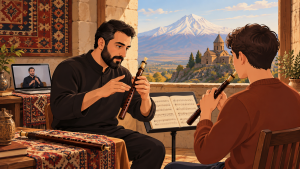
DuClar – Duduk Meets Clarinet: A Hybrid Instrument for Modern Musicians
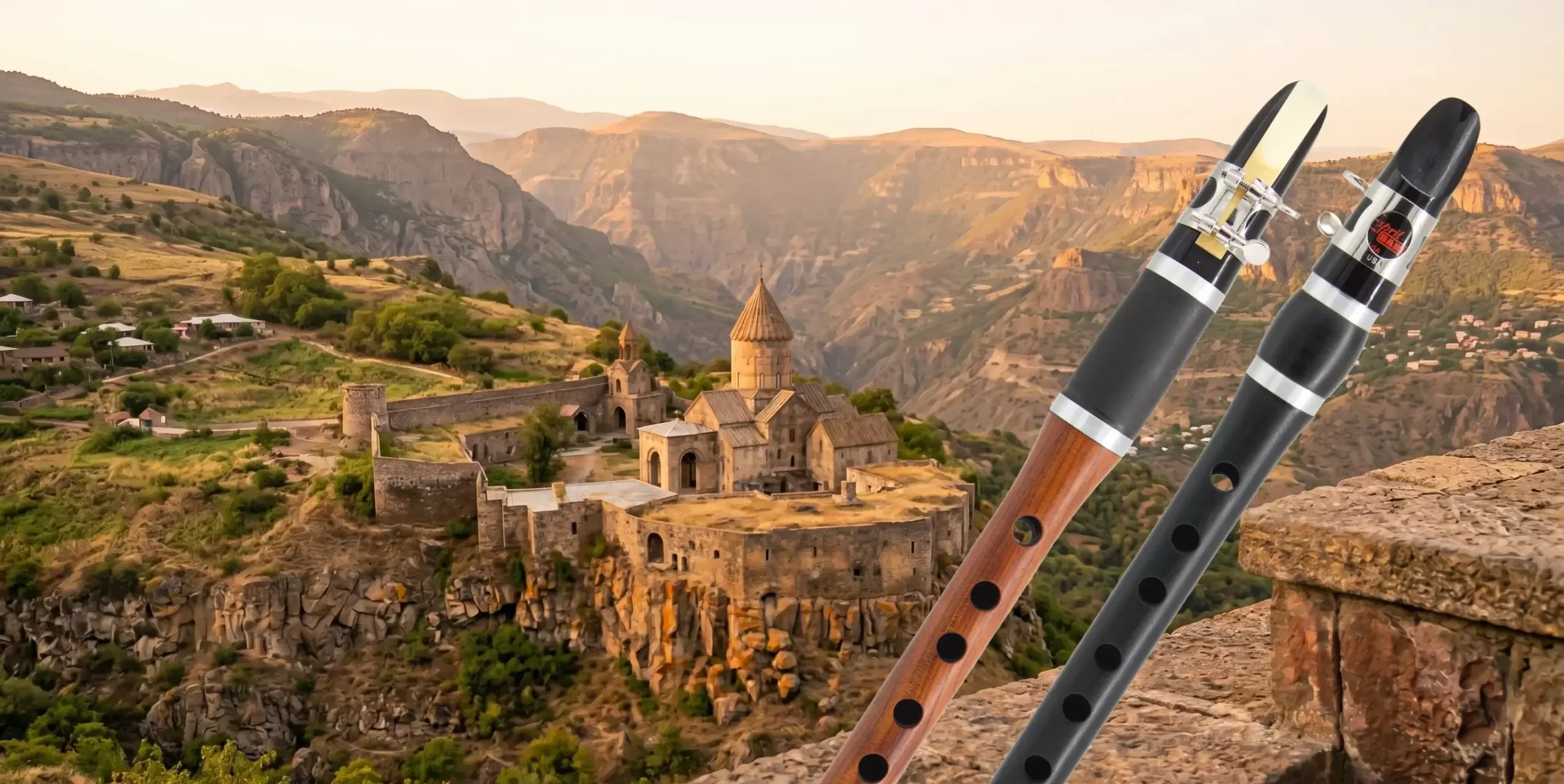
The world of wind instruments continues to evolve as musicians search for new ways to combine tradition, comfort, and creative expression. Among the most interesting modern developments is the DuClar, a hybrid instrument that blends the warm body of the Armenian duduk with the familiar mouthpiece system of a clarinet.
Designed for modern musicians, the DuClar offers a unique playing experience that combines the emotional depth of the duduk with the accessibility and control many clarinet players already know.
This innovative fusion creates a bridge between ancient Armenian musical tradition and contemporary performance possibilities.
👉 Discover the Armenian Duduk: https://duduk-rocks.com/
👉 Explore more articles: https://duduk-rocks.com/blog/
What Is the DuClar?
The DuClar is a hybrid wind instrument that combines:
- the wooden body and tonal philosophy of the Armenian duduk,
- with a clarinet-style mouthpiece and reed system.
Traditional duduks use a large double reed called a ghamish, which gives the instrument its famous breath-like and emotional tone. While beautiful, the traditional duduk reed can require significant breath control and technical adaptation, especially for musicians coming from Western woodwind backgrounds.
The DuClar was developed to provide:
- easier playability,
- smoother adaptation for clarinetists,
- stable airflow control,
- and modern tonal flexibility.
By integrating a clarinet mouthpiece into a duduk-inspired body, the instrument creates a completely new musical identity while preserving much of the warmth associated with Armenian duduk music.
The Armenian Duduk Influence
To understand the DuClar, it is important to understand the influence of the Armenian duduk itself.
The duduk is one of Armenia’s oldest and most emotionally expressive instruments. Traditionally crafted from apricot wood, the duduk has been used for centuries in:
- folk music,
- ceremonies,
- storytelling traditions,
- and spiritual performances.
Its soft and melancholic sound became internationally recognized through legendary musicians such as Jivan Gasparyan and through cinematic music used in films and documentaries.
The emotional character of the duduk comes from several elements:
- the acoustic properties of apricot wood,
- the cylindrical bore,
- and especially the large double reed system.
The DuClar takes inspiration from this tonal philosophy while adapting the instrument for modern musical experimentation.
Why Combine a Duduk and a Clarinet?
Many musicians love the sound of the duduk but struggle with the technical demands of the traditional reed.
Clarinet players, in particular, often seek:
- easier transition between instruments,
- familiar embouchure techniques,
- more stable tuning,
- and greater flexibility in contemporary music settings.
The DuClar responds to these needs by introducing a clarinet-style mouthpiece system.
This allows musicians to:
- approach the instrument more naturally,
- reduce the learning curve,
- and explore duduk-inspired tones without fully mastering traditional duduk reeds.
The result is a hybrid instrument capable of producing warm and expressive sounds while remaining accessible to a broader range of performers.
How the DuClar Sounds
The sound of the DuClar sits somewhere between:
- the soft warmth of the duduk,
- and the focused articulation of the clarinet.
It often produces:
- deep and airy tones,
- smooth phrasing,
- expressive vibrato,
- and cinematic textures.
While it does not perfectly replicate the exact sound of a traditional Armenian duduk, it creates its own unique tonal identity.
For many modern musicians, this hybrid character becomes an advantage rather than a limitation.
The instrument works especially well in:
- ambient music,
- film scoring,
- jazz fusion,
- meditation music,
- experimental compositions,
- and world music collaborations.
The Role of Wood and Acoustics
Like traditional duduks, many DuClar-style instruments continue to use woods chosen for their warm acoustic properties.
Apricot wood remains highly respected because of its:
- soft resonance,
- tonal warmth,
- and natural harmonic balance.
The cylindrical design inherited from the duduk tradition also contributes to the instrument’s smooth and vocal-like tonal response.
Although the clarinet mouthpiece changes airflow behavior and articulation, the body of the instrument still carries much of the organic warmth associated with duduk-style acoustics.
Easier Playability for Modern Musicians
One of the biggest advantages of the DuClar is accessibility.
Traditional duduk performance often requires:
- advanced breath support,
- delicate reed management,
- and years of embouchure adaptation.
For clarinet and saxophone players, switching to a clarinet-style mouthpiece allows a more immediate connection with the instrument.
This makes the DuClar attractive for:
- studio musicians,
- composers,
- educators,
- and multi-instrumentalists.
It also opens the door for musicians who admire duduk music but may not yet feel ready to commit to the technical demands of traditional reeds.
DuClar in Contemporary Music Production
Modern music production increasingly values unique and emotional acoustic textures.
The DuClar fits naturally into:
- cinematic sound design,
- atmospheric recording sessions,
- hybrid orchestral music,
- electronic fusion,
- and modern world music.
Its combination of warmth and articulation allows producers to blend it easily with:
- strings,
- synthesizers,
- pianos,
- percussion,
- and ambient effects.
This flexibility makes the instrument particularly appealing for composers searching for emotional melodic colors beyond traditional orchestral instruments.
Tradition and Innovation Together
Hybrid instruments sometimes generate debate among traditional musicians. However, throughout history, musical instruments have constantly evolved to meet new artistic needs.
The DuClar does not replace the traditional Armenian duduk. Instead, it represents another branch of musical exploration inspired by the duduk’s emotional legacy.
Traditional duduk performance remains deeply connected to Armenian cultural heritage and centuries of musical craftsmanship.
At the same time, modern instruments like the DuClar help introduce new audiences to duduk-inspired sound worlds and encourage creative experimentation.
Who Should Try a DuClar?
The DuClar can be especially interesting for:
- clarinet players,
- saxophonists,
- film composers,
- ambient musicians,
- experimental artists,
- and world music performers.
It may also appeal to beginners who want to explore duduk-inspired sounds before transitioning to a traditional double-reed duduk.
Because of its hybrid design, the instrument encourages creativity and cross-genre experimentation.
Conclusion
The DuClar represents a fascinating meeting point between Armenian musical tradition and modern innovation.
By combining the expressive body of the duduk with the familiar playability of a clarinet mouthpiece, the instrument creates a new musical experience for contemporary musicians.
Its warm tone, cinematic character, and accessible design make it an exciting option for players seeking emotional depth without abandoning modern performance flexibility.
As global interest in unique acoustic instruments continues to grow, hybrid creations like the DuClar demonstrate how traditional inspiration can evolve into entirely new forms of artistic expression.
FAQ About the DuClar
What is a DuClar?
The DuClar is a hybrid instrument that combines a duduk-style body with a clarinet mouthpiece system to create a unique and expressive sound.
Is the DuClar a traditional Armenian instrument?
No. The DuClar is a modern hybrid inspired by the Armenian duduk, but it is not a traditional historical instrument.
What makes the DuClar different from a duduk?
Traditional duduks use a large double reed, while the DuClar uses a clarinet-style mouthpiece and reed system for easier playability.
Does the DuClar sound like a real duduk?
The DuClar captures some of the warmth and emotional character of the duduk but develops its own unique hybrid sound.
Is the DuClar easier to play than a duduk?
For clarinet or saxophone players, the DuClar is often easier to approach because of the familiar mouthpiece system.
What kind of music is the DuClar used for?
The DuClar works well in cinematic music, ambient music, jazz fusion, world music, meditation music, and experimental compositions.
Can beginners play the DuClar?
Yes. Many beginners and woodwind players find the DuClar easier to learn than a traditional double-reed duduk.
What wood is typically used for DuClar instruments?
Many DuClar-style instruments use woods with warm acoustic properties, including apricot wood inspired by traditional duduk craftsmanship.
Is the DuClar good for film music?
Yes. Its warm and atmospheric sound makes it especially suitable for cinematic and emotional compositions.
Does the DuClar replace the traditional duduk?
No. The DuClar is a modern interpretation inspired by the duduk, while the traditional Armenian duduk remains a distinct cultural instrument with its own performance tradition.